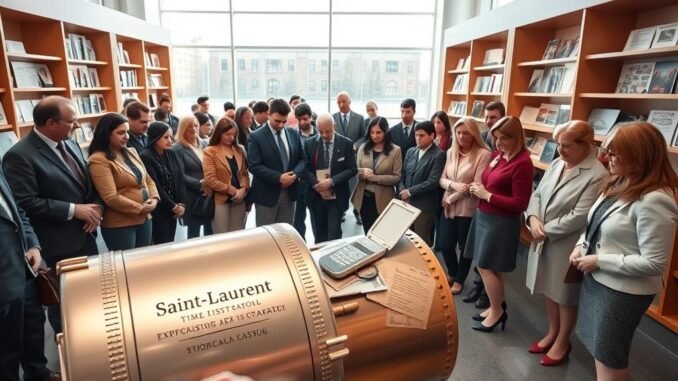

Only 1 in 10 community time capsules last more than 20 years. But Saint-Laurent’s Millennium time capsule is a rare exception. It was opened in 2023, showing life at the start of the 21st century.
At Église Saint-Laurent, people gathered to see the time capsule’s contents. They included historical artifacts, letters, and drawings. These items were sealed in 2000 and were now seen for the first time in 25 years.
The time capsule was a mix of public records and personal memories. Each item told a story of the past and invited a new perspective. It showed how important it is to preserve history.
The unveiling highlighted the importance of history preservation. It made the time capsule a bridge between past and present. Now, it’s on display at Borough Hall, inviting everyone in Montréal to explore.
The borough plans to reseal the time capsule on September 20. They are asking for new suggestions by August 25. This way, the time capsule becomes a shared promise for the future.
The Millennium time capsule is more than just yesterday’s stories. It guides us in preserving history for the future. It ensures Saint-Laurent’s voice will be heard in 2043 and beyond.
Unsealing a Moment in History at Église Saint-Laurent
On 10 August, neighbours and visitors gathered for a time capsule ceremony outside Église Saint-Laurent. The seal broke, the lid rose, and the crowd leaned in. This time capsule project turned a quiet church square into a stage for preserving the past and inspiring future discovery.
Under clear skies, applause echoed as the first artefacts appeared—objects that carried memory and meaning, handled with care to honour history preservation.
Opening ceremony highlights and dignitaries in attendance
Local leaders joined residents to witness the reveal at Église Saint-Laurent. Mayor Alan DeSousa stood alongside City Councillor Vana Nazarian, Borough Councillor Annie Gagnier, Borough Councillor Jacques Cohen, Member for Acadie André Albert Morin, and City Councillor Aref Salem. Their presence signalled support for history preservation and the borough’s long-term time capsule project.
The program mixed brief remarks with live reactions from the crowd. Each item lifted from the container drew a new ripple of excitement, a sign of community pride rooted in shared memory.
Why this unveiling matters for preserving the past
The act of opening a sealed archive makes heritage tangible. By preserving the past in a secure vessel, the borough safeguards stories that might be lost. The ceremony bridged years in a single moment, linking careful curation to future discovery and responsible stewardship.
Simple items gained weight in this setting. They became touchstones, strengthening local identity and guiding ongoing history preservation.
Community pride and cultural heritage in Saint-Laurent
Residents arrived with children, parents, and grandparents, each adding a voice to the chorus of community pride. The scene reflected a living cultural heritage, where everyday objects and personal notes carry the spirit of the place.
Standing before Église Saint-Laurent, they saw how a time capsule ceremony can unite people. The time capsule project renewed trust in collective memory and set the tone for what comes next, as Saint-Laurent continues preserving the past for future discovery.
What Was Inside: Artifacts, Letters, and Drawings from 2000
The time capsule opened a window into Saint-Laurent’s life at the start of the third millennium. Curators mixed historical artifacts with personal mementos. They showed how people lived, played, and dreamed, all while keeping the past safe.
Objects that capture everyday life at the dawn of the third millennium
Items like a soccer ball and a Britney Spears CD were included. They reminded us of music, sports, and youth culture. Flyers showed local shops and prices, while a summer camp t-shirt highlighted neighbourhood pride.
These objects give us practical ideas for future time capsules. Include items that are used often, seen everywhere, and loved by many. They make the capsule feel real and personal.
Testimonials filled with humanity, imagination, and hope
Letters shared stories of family life, weekend plans, and hopes for safer streets. Short notes and signatures added depth, making the mementos a shared experience.
Drawings and writings from school classes showed dreams of advanced technology. The tone was warm and hopeful, showing the value of preserving the past for the future.
How curated selections reflect Saint-Laurent’s identity in 2000
The mix of culture, sport, and schoolwork showed Saint-Laurent’s connection to global trends and local roots. Music hits, community gear, and classroom art painted a picture of residents in 2000.
These contents reveal a lively, diverse community. They show how everyday items can keep memories and history alive for years. For those looking for time capsule ideas, this example is inspiring.
Children’s Visions of the Future
They opened the time capsule and found youth creativity in bold lines and colours. These pages carry nostalgia, preserving the past and guiding us to the future. Each sketch shows young minds’ views on progress and their time capsule ideas.
Predictions of advanced cellphones, electric cars, and ultrafast aircraft
Drawings from 2000 showed cellphones streaming movies, electric cars, and fast planes. These ideas are now part of our lives, guiding us to the future.
Students linked tools to daily life in short captions. They imagined video calls with grandparents and buses that charge overnight. Their drawings make complex tech easy to understand, a gift for preserving history.
How kids’ drawings serve as historical artifacts
These sheets are more than art; they are historical artifacts. They are dated, use local slang, and show brand logos. Like the West Hills Junior High find, they help us see how life has changed.
Teachers and families can use these images to talk about design and ethics. Clear labels and a simple index make the archive easy to read later.
Nostalgia in a capsule: youthful creativity across generations
Today, the pages spark awe and nostalgia. They carry youth creativity through time, inviting all to imagine the future together.
Placed back in a vault, the collection preserves history while looking to the future. It shows that a well-made time capsule is a bridge, guiding us with simple tools.
| Theme from 2000 | Student Vision | Why It Matters Now | Practical Time Capsule Ideas |
|---|---|---|---|
| Communication | Pocket phones with video chat and instant maps | Shows early expectations for constant connection | Include a printed SMS thread and a call flow diagram to aid future discovery |
| Transport | Electric cars and buses with quick charging | Tracks shifts in energy and urban planning | Add a transit pass, a charging map, and a child’s route sketch for preserving the past |
| Flight | Ultrafast aircraft shrinking travel time | Links mobility to education, work, and family life | Archive a boarding pass, airport diagram, and a speed comparison chart as historical artifacts |
| Everyday Life | Homework done on shared screens and home networks | Highlights how tech reshapes routines | Store a classroom schedule, a Wi‑Fi setup sketch, and notes from group projects to enrich the time capsule |
Community Picks: Contest Submissions That Made the Cut
Residents picked these time capsule contents. They turned everyday objects into cultural snapshots. These items hold special memories and show how people in Saint-Laurent were preserving the past.
The collection mixes personal mementos with public life. Each item tells a story that goes beyond one family or street.
From a soccer ball to a Britney Spears CD: special memories preserved
A well-worn soccer ball shows weekend leagues and pick-up games at Parc Marcel-Laurin. It captures the joy of youth sport and open fields.
A Britney Spears CD, sold at HMV and Archambault in 2000, captures mainstream playlists and radio buzz on MusiquePlus. These personal mementos echo living rooms, carpools, and school dances.
Advertising flyers and a summer day camps t-shirt as cultural snapshots
Advertising flyers show pricing, fonts, and store layouts from local merchants. They freeze design trends and neighbourhood commerce in a single glance.
A summer day camps t-shirt in Saint-Laurent colours traces municipal programs and a shared sense of place. Together, these time capsule contents aid history preservation while preserving the past through familiar touchstones.
Personal mementos that tell bigger stories
Ordinary keepsakes become guides to daily life. A ticket stub, a receipt, or a camp shirt can map routines, routes, and friendships.
Viewed as a set, the time capsule turns small tokens into a larger narrative. It links special memories to public timelines and keeps the time capsule open to many voices.
| Item | Why It Matters | Cultural Insight | How It Aids History Preservation |
|---|---|---|---|
| Soccer Ball | Signals everyday recreation and youth sport culture | Shows park use, team play, and weekend routines | Documents community health, leisure, and preserving the past through play |
| Britney Spears CD | Captures pop music trends at the millennium | Reflects radio charts, retail habits, and teen culture | Anchors time capsule contents in verifiable media history |
| Advertising Flyers | Records prices, brands, and graphic design | Offers cultural snapshots of local commerce | Enables cost-of-living and design trend analysis |
| Summer Day Camps T‑Shirt | Embodies municipal programs and identity | Shows colours, logos, and seasonal activities | Preserves civic branding and community participation |
Borough Hall Exhibit: See the Memories Up Close
The Borough Hall exhibit is at the heart of Saint-Laurent’s civic hub. It invites residents to see the time capsule exhibit in person. Objects, letters, and drawings are in clear cases, inviting reflection on cultural heritage and the stories of 2000.
It’s a bridge between memory and daily life. It gently prompts us to preserve history.
Where and when to view the display
The display is open at Borough Hall during regular weekday hours. It’s also open on select evenings. Staff help visitors understand the time capsule project.
Visitors can move at their own pace. They can pause at showcases of family snapshots, school drawings, and neighbourhood keepsakes.
How exhibitions deepen history preservation
Seeing artefacts up close changes what people remember. Labels connect each item to moments that defined a street, a team, or a festival. This turns private memories into shared cultural heritage.
Through careful curation and plain-language notes, the exhibit supports history preservation. It shows how everyday objects become evidence of change.
Interactive ideas for schools and families visiting the exhibit
Teachers and caregivers can make a visit interactive. Students can compare predictions from 2000 to today’s phones, transit, and music. They can then sketch what they expect in 2043.
Families can use simple prompts to spark community engagement. They can inspire their own mini time capsule project at home.
| Visitor Activity | What to Look For | Learning Outcome | Try It On-Site |
|---|---|---|---|
| Then vs. Now Tech Scan | Drawings of early cellphones and notes on the internet | Understand how design and access evolved | List three features that changed |
| Neighbourhood Memory Map | Photos, flyers, and camp t-shirts tied to local places | Connect artefacts to community identity | Mark a map with where each item originated |
| Family Story Prompt | Letters that describe daily routines | See how ordinary life becomes history | Write a 3-line note for a future capsule |
| Art Response Corner | Children’s drawings of future transport | Practice visual literacy and prediction | Sketch a 2043 commute and add a caption |
Voices Across Time: Residents and Organizers Return
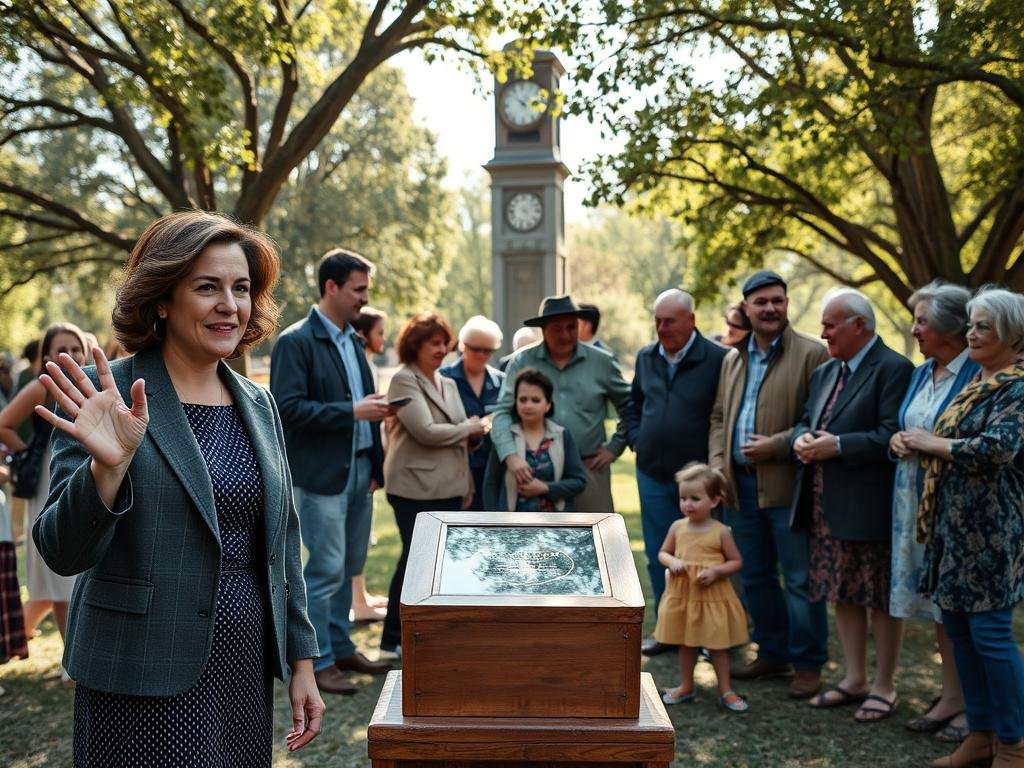
They gathered at Église Saint-Laurent with a quiet sense of community pride. The time capsule ceremony brought back the faces who helped shape the project. They were the ones who once slipped notes and objects into a small metal vault, preserving the past for neighbours they might never meet.
People who placed items in 2000 reunite in 2025
Residents who contributed to the time capsule came back to see what time had done to their hopes. Some travelled from Toronto to join friends and family. Their stories echoed across the room, turning personal artefacts into community storytelling that felt vivid and close.
They compared memories and milestones, noting how Saint-Laurent changed as new parks, transit links, and schools arrived. The reunion made space for intergenerational connections, as teens listened to adults describe life at the turn of the millennium.
Former Ville de Saint-Laurent employees who built the project
Former municipal staff who launched the original time capsule stood alongside today’s team, linking policy to people. Their insights showed how careful planning, archival checks, and outreach served preserving the past with care and rigour.
They described how departments coordinated storage, humidity control, and selection criteria. That shared process sustained community pride and set a foundation others could follow for the next time capsule.
Intergenerational connections and community storytelling
Parents, grandparents, and students swapped reflections in small circles. Short speeches gave way to lively chats, where intergenerational connections turned memory into action. Each voice added detail to a wider map of local life.
As the time capsule ceremony wound on, residents noted the power of practical steps—clear labelling, mindful curation, and inclusive outreach—to keep community storytelling alive. They left with ideas for new items that honour the past while pointing to what comes next.
On Our Way to 2043: Call for New Submissions
Saint-Laurent is calling on residents to contribute to its time capsule project. This move aims to preserve history and bring in new voices. It encourages everyone to join in and share their stories.
How to suggest items via the borough website
People can submit items through the borough website. They just need to fill out a simple form. It asks for a description, why it’s important, and how it shows life in Saint-Laurent today.
Once a proposal is accepted, the contributor brings the item to Borough Hall. There, it’s verified and packed safely. This makes the project inclusive and straightforward.
Key dates: submit by August 25; resealing on September 20
Now is the time to suggest items, with a deadline of August 25. Items are then prepared for sealing on September 20. This aligns with Saint-Laurent’s 150th anniversary.
These dates help organize the materials and plan for the future. They ensure a smooth transition from proposal to placement.
Time capsule burial ceremony planning and participation
The borough is organizing a ceremony for the time capsule burial. Schools, local groups, and businesses are invited to participate. The event will include readings, music, and a pledge to preserve history.
Residents can help out as ushers, photographers, or speakers. This highlights the community’s role in preserving history. It connects today’s stories to tomorrow’s readers, showing care and continuity.
| Step | What Residents Do | Why It Matters | Key Date |
|---|---|---|---|
| Propose an Item | Complete the online form with a clear description and context | Ensures transparent selection and strong historical value | Now–August 25 |
| Deliver Accepted Item | Bring the approved item to Borough Hall with contact details | Supports proper cataloguing and safe handling | Upon approval |
| Prepare for Resealing | Confirm labels, permissions, and packing materials | Protects artefacts for future discovery | Early September |
| Attend the Ceremony | Join the time capsule burial ceremony and volunteer roles | Builds community participation and pride | September 20 |
How to Choose a Time Capsule Container and Contents
Choosing a time capsule container depends on where it will be. In Canada, the weather can be tough. So, pick a strong material and seal it well. A good time capsule has a solid build and items that show today’s life and will last for years.
Durable time capsule container options suited for Canadian climates
Stainless steel is great because it doesn’t rust and keeps water out. Polyethylene is strong and light. For very cold places, titanium or marine-grade stainless steel is best because they handle salt and pressure well.
Make sure the container has a silicone gasket and fasteners to keep moisture out. Add desiccant packs and oxygen absorbers to stop moisture buildup. For extra protection, put the capsule in a PVC sleeve. Use metal tags for the outside that can be read for a long time.
Time capsule ideas: local keepsakes, letters, and photographs
Start with local items. Add a Borough Hall program, a summer camp t-shirt, STM passes, and a Canadiens game stub. Include letters that tell about daily life, signed and dated, and photos on archival paper.
Also, add cultural items like a music CD, flyers from local shops, and a map of Saint-Laurent. Put each item in acid-free sleeves and write a note about its origin and meaning.
Best practices for sealing, labelling, and burying artifacts
Protect each item by using archival envelopes and avoiding PVC plastics. Seal the container in a dry place. Label items with pencil or pigment ink and include a list of contents and a contact sheet.
When burying, get permits from the Borough of Saint-Laurent and check for utilities. Record GPS, depth, and date in files and inside the capsule. Set a retrieval year, like 2043, and keep a backup plan in local archives.
| Container Material | Seal Type | Strength in Canadian Climates | Recommended Use | Notes |
|---|---|---|---|---|
| Stainless Steel (316L) | Welded seams + silicone gasket | Excellent against corrosion, freeze–thaw, moisture | Long-term burial in urban parks or civic grounds | Pair with desiccant; add etched ID plate |
| High-Density Polyethylene | Compression lid with O-ring | Good impact resistance; moderate moisture barrier | Shallow burial or indoor vault storage | Use secondary PVC sleeve for added protection |
| Titanium Grade 2 | Bolt-down flange + silicone gasket | Outstanding in extreme cold and damp soil | High-risk sites with water exposure | Higher cost; ideal for multi-decade time capsule projects |
| Marine-Grade Stainless (2205) | Welded body + gasketed lid | Superior in saline or de-icing salt zones | Roadside or plaza locations | Add oxygen absorbers to reduce internal humidity |
Rituals and Traditions: From Burial to Future Discovery
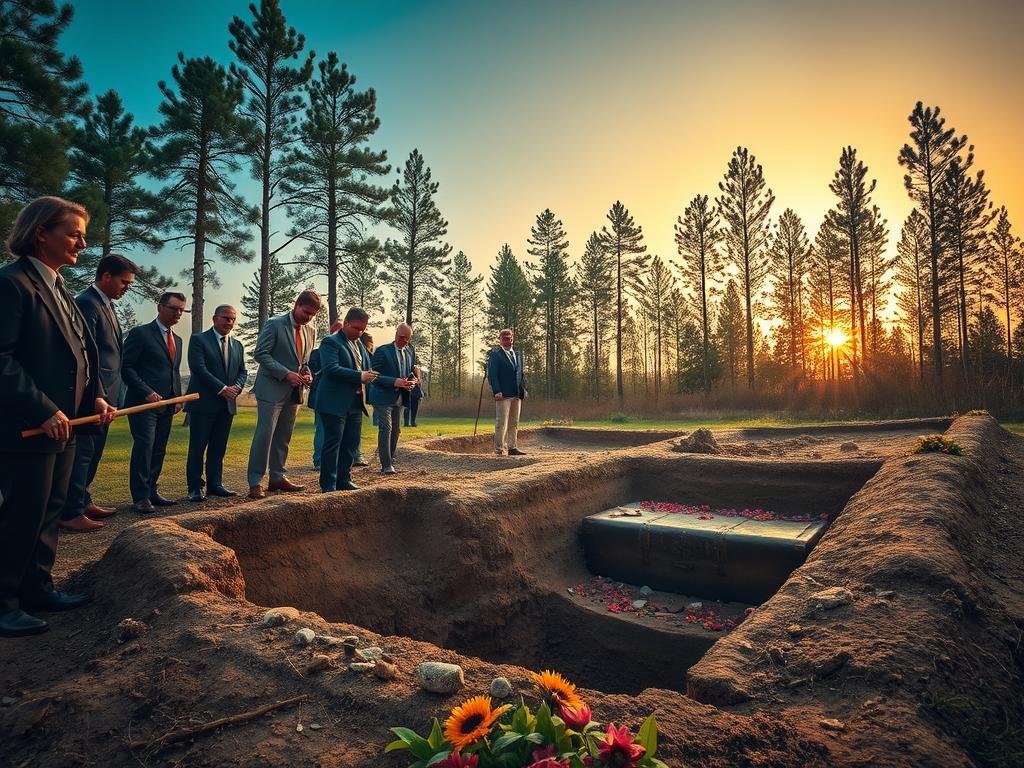
Saint-Laurent’s next chapter starts with a shared ritual. A thoughtful time capsule ceremony turns curiosity into civic pride. It echoes the opening at Église Saint-Laurent and sets new standards for time capsule burial traditions.
Designing a time capsule ceremony for community engagement
A strong program blends welcome remarks, short speeches, and acknowledgements of contributors. Explain how a time capsule burial preserves today’s voice for tomorrow. Invite schools and local artists to read letters or perform a piece that links past and present.
Make it hands-on. Set up stations where residents tag sealed items, sign a witness sheet, and learn about ethical stewardship in plain terms. Close with a collective pledge that notes the opening year and the shared duty to protect the capsule.
Burial traditions, site selection, and archival records
Time capsule burial traditions work best with careful site selection. Choose a stable, accessible civic space, coordinate with the Borough, and confirm soil and drainage conditions. Mark the location discreetly on-site and in municipal files.
Maintain thorough archival records. Document GPS coordinates, container materials, contents lists, and reseal and open dates. Store duplicates with Ville de Montréal archives and at Borough Hall to ensure continuity if teams change.
Planning for future discovery and ethical stewardship
Think ahead to future discovery from the start. Publish inclusion criteria, secure consent for personal materials, and use climate-resilient packaging. Set a clear opening window and appoint a sponsor office to hold that responsibility.
Build redundancy. Keep digital and paper logs, schedule periodic checks of markers, and include a bilingual note inside the capsule. These steps link today’s time capsule burial to tomorrow’s reveal with trust and care.
| Ceremony Element | Best Practice | Why It Matters | Who Leads |
|---|---|---|---|
| Opening Remarks | Brief welcome, purpose of the time capsule ceremony | Sets tone and invites broad participation | Borough Mayor or Councillor |
| Education Segment | Explain time capsule burial traditions and ethical stewardship | Builds trust and shared understanding | Archivist or Museum Curator |
| Site Selection Reveal | Share map, GPS, and signage plan | Supports accurate archival records and retrieval | Urban Planning Team |
| Community Involvement | Witness sheet, item tagging, youth readings | Strengthens memory across generations | School Board and Cultural Partners |
| Sealing Protocol | Document contents, reseal date, and climate measures | Ensures integrity until future discovery | Records Office and Facilities |
Culture in Context: Libraries, Learning, and Local Memory
In Saint-Laurent, the Bibliothèque du Vieux-Saint-Laurent is a key part of the community. It offers a warm place for reading, learning, and cultural events. This year, it celebrates 60 years with exciting activities that mix history with hands-on learning.
Bibliothèque du Vieux-Saint-Laurent’s 60th anniversary activities
The library is celebrating its 60th year with a big event on September 27 and 28. From 10 a.m. to 5 p.m., there will be learning and fun. It’s a chance to celebrate local history and welcome new voices.
- Conference “Saint-Laurent au fil du temps” with Françoise Bâby (Sept. 27, 10 a.m.; registration 514 855-6130, ext. 4744).
- Mural inauguration (Sept. 27, 11:15 a.m.).
- Bag personalization workshop (Sept. 27, 2 p.m.; registration required).
- $1 book sale (Sept. 27–28, 10 a.m.–4 p.m.).
- Show “Le voyage de Medizen” with Le Baluchon magique (Sept. 28, 10:30 a.m.).
- Conference with Michel Rabagliati on his 40-year career (Sept. 28, 3–4:15 p.m.; registration required).
Each event adds to the community’s identity. Together, they make keeping memories a fun, shared activity.
Workshops, conferences, and book sales that support history preservation
These events spark curiosity and guide research. The $1 book sale helps build home libraries. This supports history preservation all year.
Hands-on activities and talks keep cultural programs grounded in history. Yet, they also make history personal and engaging.
Using library programs to inspire a time capsule project
The library’s events are a great start for a time capsule project. You can learn from Françoise Bâby and reflect on the mural. Workshops help you label and describe items that show today’s Saint-Laurent.
Families, teachers, and newcomers can collect stories and artefacts. They can document sources. This way, they build local memory with care, ensuring future readers will understand today’s voices.
| Activity | How It Builds Local Memory | Practical Takeaway for a Time Capsule Project |
|---|---|---|
| “Saint-Laurent au fil du temps” conference (Françoise Bâby) | Provides verified context for neighbourhood change and heritage | Use dates, places, and names accurately in item captions |
| Mural inauguration | Creates a visual record of shared values and public art | Include a photo and artist statement to document meaning |
| Bag personalization workshop | Encourages creative expression tied to everyday life | Design labels or inserts that explain an object’s story |
| $1 book sale | Expands access to reference and community histories | Select a book excerpt or flyer that captures the present |
| “Le voyage de Medizen” performance | Connects families through shared cultural experiences | Add a program sheet and a child’s reflection to the capsule |
| Michel Rabagliati conference | Highlights a Canadian creator’s long-form storytelling | Include a short comic or sketch showing daily life in 2025 |
From page to plaza, the Bibliothèque du Vieux-Saint-Laurent turns learning into action—linking cultural programming, workshops and conferences, and history preservation to a living archive that residents can hold in their hands.
Why This Matters for Saint-Laurent and Canada
Saint-Laurent’s time capsule connects local voices to Canada’s broader story. It uses letters, drawings, and pop-culture items to show how everyday objects hold special memories over time. This is a hands-on way to preserve history.
The ceremony at Église Saint-Laurent, with support from leaders and locals, boosts community pride. It roots cultural heritage in a shared space. It also encourages young people to get involved, setting a good example for Canadian communities everywhere.
Items like kids’ sketches of the future and a summer camp t-shirt reveal the power of small details. They help teachers and others explain how things have changed over time. They keep special memories alive for everyone.
Looking ahead to 2043, Saint-Laurent’s exhibit and outreach efforts are clear. They balance cultural heritage with new contributions. This ensures Canadian communities can learn, take part, and feel proud.
Conclusion
Saint-Laurent’s Millennium time capsule has done more than just show us historical artifacts. It has sparked curiosity and pride in preserving the past. Letters, drawings, and small treasures from 2000 tell us about daily life, shared values, and dreams.
The exhibit at Borough Hall lets visitors see how cultural heritage lives on through objects and stories. This is a powerful way to connect with our past.
The borough is now calling for new items for the next time capsule, to be sealed on September 20. This invites residents to contribute to future discovery in 2043. With support from dignitaries, community leaders, and the Bibliothèque du Vieux-Saint-Laurent, the project links memory with civic action.
Each contribution adds context, whether it’s a program flyer, a family photo, or historical artifacts. This shows how important it is to document our everyday lives.
As we plan for the next time capsule burial ceremony, the lesson is clear. A time capsule is a promise to the future and a mirror to the present. By documenting everyday life with care, Saint-Laurent strengthens its cultural heritage and sets a standard for preserving the past in Canada.
The story continues—with new voices, new keepsakes, and a renewed commitment to a shared record that endures.
FAQ
What is the Saint-Laurent Millennium time capsule and why is it significant?
Who attended the opening ceremony at Église Saint-Laurent?
What were the highlights of the unsealing event?
What kinds of items were found inside the time capsule?
How do the children’s drawings function as historical artifacts?
Why are ordinary objects like flyers and a t-shirt important?
Where can the public view the time capsule contents?
How can schools and families make the most of the Borough Hall exhibit?
Are the original contributors involved in the 2025 events?
How can residents suggest items for the resealed capsule?
What are the key dates for the resealing?
What makes a good time capsule container for Canadian climates?
What are smart time capsule ideas for contents?
What are best practices for sealing, labelling, and burying artifacts?
How should a time capsule ceremony be designed?
What are recommended burial traditions and records to maintain?
How does the borough plan for future discovery?
What role does the Bibliothèque du Vieux-Saint-Laurent play in this story?
FAQ
What is the Saint-Laurent Millennium time capsule and why is it significant?
The time capsule is a collection of objects, letters, and drawings from 2000. It was opened on August 10 in front of Église Saint-Laurent. It shows what life was like at the start of the third millennium.
Who attended the opening ceremony at Église Saint-Laurent?
Many people came, including Mayor Alan DeSousa and City Councillors Vana Nazarian and Aref Salem. Also, Borough Councillors Annie Gagnier and Jacques Cohen, and Member for Acadie André Albert Morin were there. Their presence showed community pride and cultural heritage.
What were the highlights of the unsealing event?
The event showed artifacts from 2000, speeches about preserving history, and a moment of nostalgia. It made people feel connected to Saint-Laurent’s history.
What kinds of items were found inside the time capsule?
Inside, there were a soccer ball, a Britney Spears CD, and flyers. There were also letters and children’s drawings. These showed everyday life and dreams for the future.
How do the children’s drawings function as historical artifacts?
The drawings showed what kids in 2000 thought the future would be like. They imagined advanced cellphones and electric cars. These drawings offer a glimpse into the past and spark conversations between generations.
Why are ordinary objects like flyers and a t-shirt important?
These items give us a glimpse of the past. They show design trends, prices, and community life. They are powerful tools for telling stories and preserving history.
Where can the public view the time capsule contents?
You can see the artifacts at Borough Hall. It’s a chance to learn about Saint-Laurent’s history and culture.
How can schools and families make the most of the Borough Hall exhibit?
Schools and families can visit and learn together. They can compare old predictions with today’s technology. This hands-on approach makes learning fun and meaningful.
Are the original contributors involved in the 2025 events?
Yes, many who contributed in 2000 came back for the opening. This included former Ville de Saint-Laurent employees. Their return enriched the community’s story and connections.
How can residents suggest items for the resealed capsule?
Residents can suggest items online until August 25. Accepted items must be delivered to Borough Hall for the resealing ceremony.
What are the key dates for the resealing?
Suggestions are due by August 25. The borough will reseal the capsule on September 20. This aligns with Saint-Laurent’s 150th anniversary plans.
What makes a good time capsule container for Canadian climates?
A good container is weather-resistant and has reliable seals. Stainless steel or high-grade polymer with gasketed lids are good choices.
What are smart time capsule ideas for contents?
Include local keepsakes, letters, photographs, and media like music and flyers. Documenting everything helps with future understanding.
What are best practices for sealing, labelling, and burying artifacts?
Use archival sleeves, desiccants, and clear labelling. Record everything and follow municipal guidelines for burial. This ensures the artifacts are safe for the future.
How should a time capsule ceremony be designed?
Include speeches, acknowledgements, and educational elements. Make sure youth and elders participate. This creates a meaningful ceremony.
What are recommended burial traditions and records to maintain?
Choose a stable site and coordinate with services. Keep records of the container, contents, GPS location, and open-by date. This ensures ethical stewardship.
How does the borough plan for future discovery?
Saint-Laurent sets clear dates for resealing and opening. It documents everything and uses climate-resilient measures. This ensures the time capsule remains relevant for future generations.
What role does the Bibliothèque du Vieux-Saint-Laurent play in this story?
The library celebrates its 60th anniversary with events. These include talks, workshops, and a
FAQ
What is the Saint-Laurent Millennium time capsule and why is it significant?
The time capsule is a collection of objects, letters, and drawings from 2000. It was opened on August 10 in front of Église Saint-Laurent. It shows what life was like at the start of the third millennium.
Who attended the opening ceremony at Église Saint-Laurent?
Many people came, including Mayor Alan DeSousa and City Councillors Vana Nazarian and Aref Salem. Also, Borough Councillors Annie Gagnier and Jacques Cohen, and Member for Acadie André Albert Morin were there. Their presence showed community pride and cultural heritage.
What were the highlights of the unsealing event?
The event showed artifacts from 2000, speeches about preserving history, and a moment of nostalgia. It made people feel connected to Saint-Laurent’s history.
What kinds of items were found inside the time capsule?
Inside, there were a soccer ball, a Britney Spears CD, and flyers. There were also letters and children’s drawings. These showed everyday life and dreams for the future.
How do the children’s drawings function as historical artifacts?
The drawings showed what kids in 2000 thought the future would be like. They imagined advanced cellphones and electric cars. These drawings offer a glimpse into the past and spark conversations between generations.
Why are ordinary objects like flyers and a t-shirt important?
These items give us a glimpse of the past. They show design trends, prices, and community life. They are powerful tools for telling stories and preserving history.
Where can the public view the time capsule contents?
You can see the artifacts at Borough Hall. It’s a chance to learn about Saint-Laurent’s history and culture.
How can schools and families make the most of the Borough Hall exhibit?
Schools and families can visit and learn together. They can compare old predictions with today’s technology. This hands-on approach makes learning fun and meaningful.
Are the original contributors involved in the 2025 events?
Yes, many who contributed in 2000 came back for the opening. This included former Ville de Saint-Laurent employees. Their return enriched the community’s story and connections.
How can residents suggest items for the resealed capsule?
Residents can suggest items online until August 25. Accepted items must be delivered to Borough Hall for the resealing ceremony.
What are the key dates for the resealing?
Suggestions are due by August 25. The borough will reseal the capsule on September 20. This aligns with Saint-Laurent’s 150th anniversary plans.
What makes a good time capsule container for Canadian climates?
A good container is weather-resistant and has reliable seals. Stainless steel or high-grade polymer with gasketed lids are good choices.
What are smart time capsule ideas for contents?
Include local keepsakes, letters, photographs, and media like music and flyers. Documenting everything helps with future understanding.
What are best practices for sealing, labelling, and burying artifacts?
Use archival sleeves, desiccants, and clear labelling. Record everything and follow municipal guidelines for burial. This ensures the artifacts are safe for the future.
How should a time capsule ceremony be designed?
Include speeches, acknowledgements, and educational elements. Make sure youth and elders participate. This creates a meaningful ceremony.
What are recommended burial traditions and records to maintain?
Choose a stable site and coordinate with services. Keep records of the container, contents, GPS location, and open-by date. This ensures ethical stewardship.
How does the borough plan for future discovery?
Saint-Laurent sets clear dates for resealing and opening. It documents everything and uses climate-resilient measures. This ensures the time capsule remains relevant for future generations.
What role does the Bibliothèque du Vieux-Saint-Laurent play in this story?
The library celebrates its 60th anniversary with events. These include talks, workshops, and a $1 book sale. They encourage research and storytelling.
Can library programs inspire a time capsule project?
Yes, programs like “Saint-Laurent au fil du temps” and creative workshops inspire residents. They help choose items that reflect community life and memories.
Why does this matter for Saint-Laurent and Canada?
The time capsule project connects local memory to Canadian traditions. By resealing for 2043, it strengthens civic identity and models responsible nostalgia preservation.
book sale. They encourage research and storytelling.
Can library programs inspire a time capsule project?
Yes, programs like “Saint-Laurent au fil du temps” and creative workshops inspire residents. They help choose items that reflect community life and memories.
Why does this matter for Saint-Laurent and Canada?
The time capsule project connects local memory to Canadian traditions. By resealing for 2043, it strengthens civic identity and models responsible nostalgia preservation.