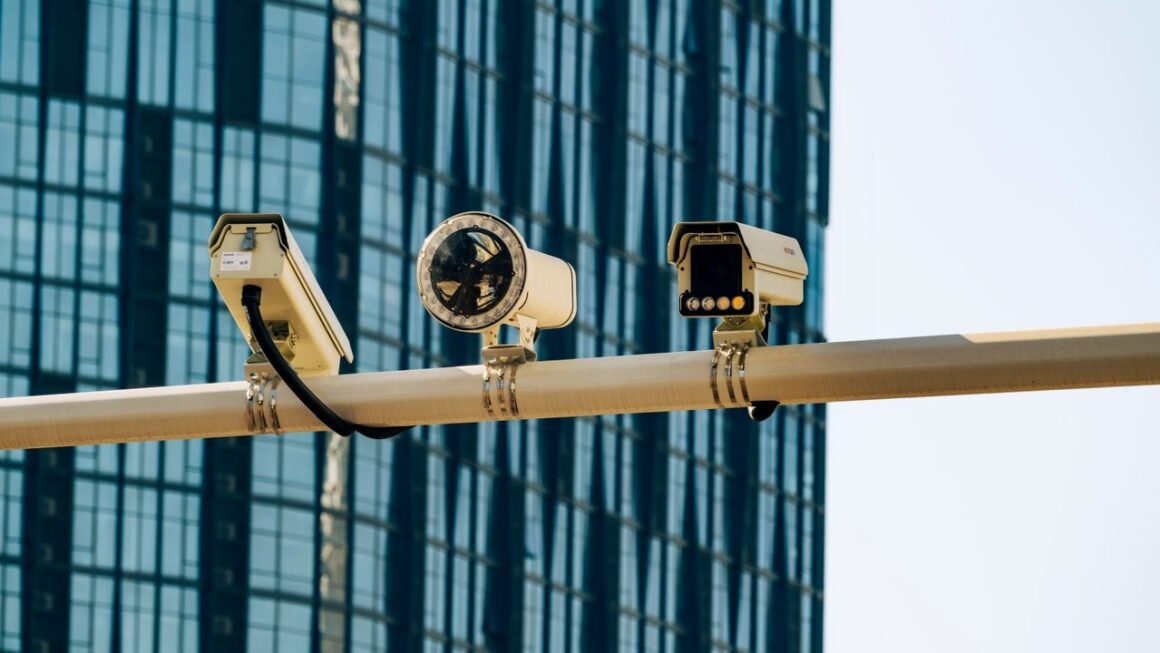
Canadian police forces expand AI license plate camera networks amid privacy complaints
A licence plate misread by an AI-powered camera in Montreal triggered a traffic stop this year that has become a reference point in Canada’s debate over automated plate readers. The stop itself is still being reviewed by the force involved, but the underlying problem is well documented: AI plate reading cameras occasionally misidentify vehicles, and when they do, the person behind the wheel bears the consequences.
You’ve probably driven past one of these cameras without noticing it. Mounted on patrol cars, bridges, or fixed poles at intersections, automatic license plate recognition (ALPR) systems now operate in multiple Canadian cities, feeding data into police databases in real time. Privacy researchers who track the technology’s expansion across North America say their spread has outpaced the legal and oversight frameworks meant to govern them.
The Montreal case matters less for its specific outcome than for what it reveals: these systems are being deployed faster than provincial privacy regulators can review them, and the public still has limited visibility into how long footage is kept, who can access it, and what happens when the algorithm gets it wrong.
Key takeaways
- Request your local police force’s ALPR policy through a freedom of information request before assuming your plate data isn’t being logged and stored. Most Canadian forces don’t publish retention schedules proactively.
- If you’re stopped after an ALPR flag, ask the officer directly what triggered the match. Misreads on damaged, dirty, or partially obscured plates are the most common cause of wrongful stops.
- Report suspected misuse to your provincial privacy commissioner, not just a police complaints board. Provincial commissioners have jurisdiction over how personal data collected by ALPR is stored and shared.
- Skip plate blockers, sprays, and covers. They’re prohibited under most provincial highway traffic acts and don’t reliably defeat infrared-based readers.
- If you’re buying a home or business security camera marketed with “AI plate reading,” check where the footage is processed and stored. Several consumer systems route data through servers located outside Canada.
How AI plate reading cameras actually work
From optical character recognition to neural network matching
A basic ALPR camera does two things: it captures an image of a plate, then runs optical character recognition (OCR) software to convert the characters into searchable text. That part of the technology has existed for decades. What changed is the second layer: modern systems use neural networks trained on millions of plate images to handle plates at odd angles, in poor light, or partially obscured by dirt or snow, conditions that defeated older OCR engines, according to descriptions from LPR camera vendors reviewed for this article.
Once the plate is converted to text, the system checks it against a “hot list”: stolen vehicles, expired registrations, or plates tied to open investigations. A match generates an alert, often within a second or two of the camera capturing the image.
What data gets captured beyond the plate number
The plate number is only part of what gets recorded. Most systems also capture a full-color image of the vehicle, a timestamp, and GPS coordinates of the capture point. Some, including Flock Safety’s camera network, also log a “vehicle fingerprint”: make, model, color, and distinguishing features like roof racks or bumper damage, letting investigators search for a vehicle even without a plate number, according to the company’s own description of the technology.
That secondary data is what worries privacy advocates most. A single plate read is a snapshot. A network of cameras logging every vehicle that passes, tied to timestamps and locations, can reconstruct someone’s movements over weeks or months.
Police AI surveillance in Canada: current deployments and legal basis
RCMP, OPP and municipal forces using Flock Safety and similar systems
Flock Safety, the Atlanta-based company founded in 2017, has expanded its camera network into Canadian municipalities through partnerships with local police services and community associations, according to reporting on the company’s AI surveillance business. Its pitch to municipalities is straightforward: neighborhoods and business improvement areas fund the cameras, and participating police services get access to the resulting plate and vehicle data.
Provincial police services and municipal forces have adopted ALPR technology through a mix of procurement channels. Some use dedicated police-grade systems built for cruiser-mounted or fixed deployment; others tap into third-party networks like Flock’s. The legal basis for this varies by province, since policing falls under provincial jurisdiction in Canada and there’s no single federal statute governing ALPR use specifically.
Provincial privacy commissioners’ rulings and open investigations
Canada’s federal Privacy Commissioner and provincial counterparts in Ontario, British Columbia, and Quebec oversee how personal information, including plate and location data, gets collected and retained under PIPEDA and provincial equivalents. None has issued a comprehensive ruling forcing a wholesale rollback of ALPR networks, but several have opened inquiries into specific deployments after complaints from residents or civil liberties groups. The pattern so far: incremental reviews of individual programs rather than blanket restrictions on the technology itself.
The automatic license plate recognition controversy
Data retention, sharing with third parties, and cross-border access concerns
How long does a police force keep a photo of your car? The answer depends entirely on the jurisdiction, and many forces don’t publish that figure clearly. The concern isn’t just domestic retention. Because some ALPR vendors operate cloud infrastructure across North America, Canadian plate data can end up stored on servers subject to US legal requests, raising cross-border access questions that Canadian privacy law wasn’t originally designed to address.
“ALPR systems are computer-controlled camera systems that automatically capture license plate images, along with the date, time, and location, and are deployed at both fixed strategic points and in mobile installations,” according to the Electronic Frontier Foundation’s overview of the technology.
Documented cases of misuse or wrongful stops
Wrongful stops tied to plate misreads aren’t unique to Montreal. Similar incidents across North America typically trace back to the same failure points: a single misread character, a damaged plate that resembles a listed plate, or a stale hot list entry that police never removed after a case closed. Vendors rarely disclose the technology’s error rate in a form that’s independently verifiable, which is itself a point of friction between manufacturers and researchers studying the systems.
Civil liberties groups’ legal challenges and demands
Civil liberties organizations have pushed for mandatory retention limits, public reporting on hot list accuracy, and independent audits of ALPR programs before further expansion. Their core demand is procedural: publish the policy before deploying the camera, not after a complaint forces disclosure.
ALPR surveillance privacy: what critics and defenders say
Law enforcement’s case for expanded plate reader networks
Police services argue ALPR networks solve a volume problem. An officer scanning plates manually can check a handful of vehicles per shift. A fixed camera network checks thousands per hour, flagging stolen vehicles and outstanding warrants far faster than manual patrol work allows. Departments point to recovered stolen vehicles and located suspects as concrete returns on the technology’s cost.
Privacy advocates’ counterarguments and proposed safeguards
Privacy advocates don’t dispute those recoveries happen. Their argument is about scale and consent: a tool built to catch a small number of flagged vehicles ends up logging the movements of everyone else who drives past. Proposed safeguards include short automatic deletion windows (measured in days, not months), a ban on selling or sharing plate data with private data brokers, and independent audits of hot list accuracy published on a regular schedule.
License plate reader cameras beyond policing
Civilian and commercial ALPR use for parking, HOA and retail security
ALPR has moved well past policing. Parking operators use it to track entry and exit times automatically. Homeowners’ associations use it to log which vehicles belong in a gated community. Retail security teams use it to flag repeat offenders’ vehicles in a parking lot. None of this requires a warrant or a public disclosure process, because private ALPR use in Canada falls under general commercial privacy law rather than the rules governing police surveillance.
Home security cameras marketed with AI plate-reading features
Consumer camera brands now advertise “AI plate reading” as a standard feature rather than a specialty product. A driveway camera that can log every plate that pulls in gives homeowners a security log, but it also means individual residents are now running small-scale ALPR operations with none of the retention limits or oversight that apply to police deployments.
| System type | Primary use | Data captured | Marketed range/speed | Night vision |
|---|---|---|---|---|
| Fixed roadway ALPR (police) | Hot list matching, investigations | Plate, timestamp, GPS, vehicle image | Multi-lane, static | Infrared, low-light capable |
| Mobile ALPR (patrol car) | Real-time stops, BOLO alerts | Plate, location, direction of travel | Vehicles moving at highway speed | IR illuminator |
| Commercial AI LPR (Ubiquiti) | Business/property security |