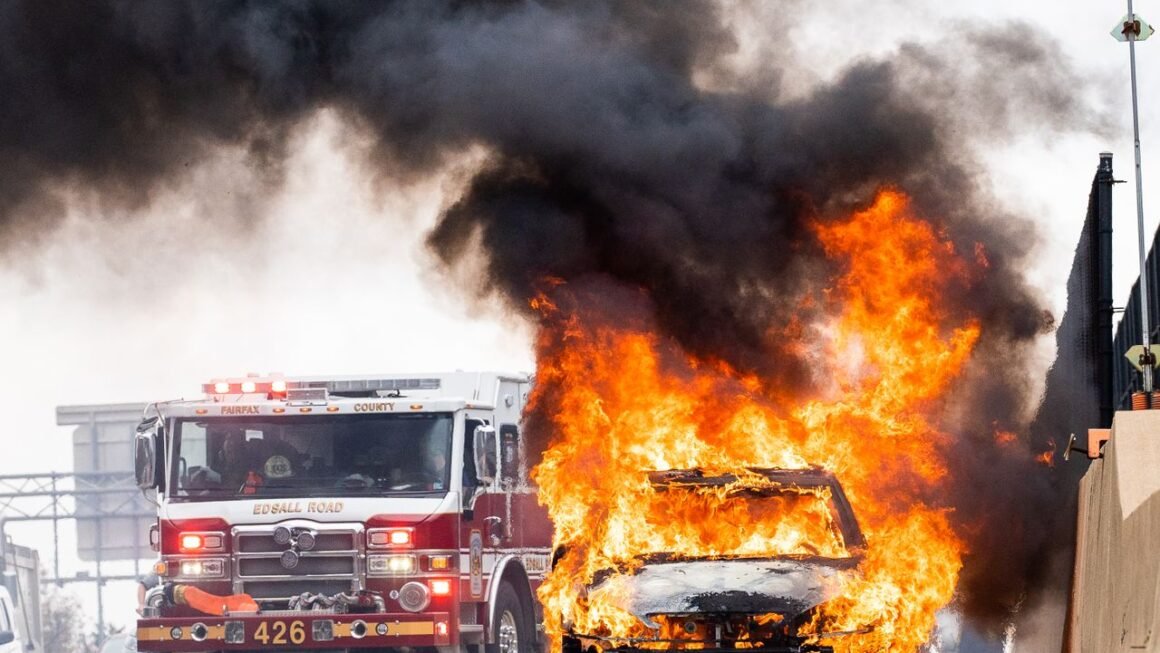
A vehicle fire in Montreal’s Saint-Léonard borough is under investigation as a suspected arson, according to the Service de police de la Ville de Montréal (SPVM). The blaze broke out in the early morning hours and prompted a fire department response before investigators were called in to examine the scene for signs of deliberate ignition. No injuries were reported.
The incident adds to a string of vehicle fires reported in Saint-Léonard over recent months, several of which police have also flagged as suspicious. The SPVM has not confirmed a link between this latest fire and earlier cases, but the frequency has drawn attention from residents and local media covering the borough.
Key takeaways
- The SPVM arson squad is treating the Saint-Léonard vehicle fire as a suspicious incident and has not made an arrest as of this report.
- If you own or park a vehicle in the affected area, photograph any damage immediately and keep your insurance claim number on hand before contacting police for a file reference.
- Under the Criminal Code, arson causing property damage carries a maximum sentence of 14 years; arson showing disregard for human life can bring a life sentence.
- Report suspicious activity around parked vehicles, including loitering or the smell of accelerant, to the SPVM at 911 for emergencies or 514-393-1133 for non-urgent tips.
- Check your vehicle for warning signs, unusual smells, dashboard warning lights, or repeated fuse failures, since these can indicate mechanical fire risk separate from arson.
What happened: timeline of the Saint-Léonard vehicle fire
Location and time of the blaze
The fire broke out early in the morning in a residential section of Saint-Léonard, a borough in Montreal’s east end with a dense mix of single-family homes and driveway parking. Similar incidents reported in the borough have clustered around overnight and pre-dawn hours, a timing pattern fire investigators consider relevant when weighing deliberate ignition against mechanical failure. One earlier case, reported by CTV News, described a fire deliberately set on Jonquet Street in the early morning hours, matching the timing of this latest occurrence.
Emergency response and fire department action
Montreal firefighters were dispatched once the vehicle fire was reported and extinguished the flames before they could spread to nearby structures or additional vehicles. In at least one prior Saint-Léonard case, two vehicles were destroyed by a single fire, an outcome fire crews try to prevent by containing flames quickly in driveways and on narrow residential streets. No injuries were reported in the latest incident, though property damage to the vehicle itself appears extensive based on the scale of the response.
Why investigators suspect arson
Physical evidence pointing to a deliberate fire
Investigators typically look for burn patterns inconsistent with mechanical or electrical failure, signs of an accelerant, and points of origin outside the engine compartment, since most accidental vehicle fires start under the hood. When a fire ignites at the vehicle’s exterior, near a tire or door panel, arson investigators treat that as a signal worth closer forensic review. The SPVM has classified this case as suspicious pending the results of that examination.
“Police investigate suspected arson after vehicle set ablaze in St-Leonard,” read one SPVM-linked report on the March 31, 2025 incident, language that closely mirrors this latest case.
How the SPVM arson squad builds a case
The Montreal arson squad’s process generally starts with securing the scene, documenting burn patterns, and interviewing witnesses or nearby residents who may have seen activity before the fire. Investigators also review surveillance footage from nearby homes and businesses, a step that has helped in prior Saint-Léonard cases where doorbell cameras captured suspects near vehicles minutes before flames appeared. Forensic technicians test debris for accelerant residue, a process that can take days to weeks to return conclusive results.
Pattern of vehicle fires in Saint-Léonard: an isolated incident or a trend?
Previous suspicious vehicle fires in the borough
Saint-Léonard has recorded multiple vehicle fires treated as suspicious over the past year, according to local and Montreal-based news reports. The table below outlines publicly reported incidents and their known outcomes.
| Date reported | Location | Vehicles affected | Status |
|---|---|---|---|
| March 31, 2025 | Saint-Léonard (general) | 1 vehicle | Investigated as arson |
| Undated (early morning) | Jonquet Street | 1 vehicle deliberately set | Confirmed intentional, under investigation |
| Undated | Saint-Léonard (general) | 2 vehicles destroyed | Alleged arson |
| Thursday, late morning | Highway 40 westbound | 1 vehicle | Fire reported, cause under review, no injuries |
| Latest incident | Saint-Léonard (residential street) | 1 vehicle | Under SPVM arson investigation |
These fires keep occurring within a relatively small area, which is part of why residents and local police are paying closer attention to the pattern in Saint-Léonard.
What separates accidental car fires from arson cases
Accidental vehicle fires typically originate in the engine bay, fuel line, or electrical system and correlate with mechanical issues, recalls, or aging components. Arson cases, by contrast, often show ignition points at the vehicle’s exterior or interior cabin, sometimes with multiple points of origin, which points to an accelerant used deliberately rather than a single mechanical failure spreading. Investigators weigh both physical evidence and circumstantial factors, such as whether the vehicle owner had recent disputes or pending insurance claims, or was targeted amid a broader pattern like the one now under review in Saint-Léonard.
Impact on residents and the neighborhood
Property damage and vehicle owners affected
Vehicle owners in these cases face immediate financial strain, including towing costs, insurance deductibles, and the loss of a vehicle they may rely on daily. In the case where two vehicles were destroyed in a single Saint-Léonard fire, both owners were left without transportation while insurance claims and the police investigation proceeded in parallel. Comprehensive auto insurance typically covers arson-related losses, but payouts can be delayed while a case remains open.
Community and safety concerns in Saint-Léonard
Residents on the affected streets have reason for concern given the recurrence of these fires, particularly on residential blocks with driveway parking close to homes. A vehicle fire that spreads to a garage or house siding stops being simply a property crime and becomes a threat to the people inside, which is why the SPVM prioritizes a fast response and forensic follow-up on these files. Local community associations in Saint-Léonard have previously called for increased lighting and camera coverage on residential streets following clusters of suspicious activity.
Legal consequences and next steps in the investigation
Criminal Code penalties for arson in Canada
Arson in Canada falls under sections 433 through 436 of the Criminal Code. Arson that shows disregard for human life, under section 433, carries a maximum penalty of life imprisonment. Arson causing damage to property, under section 434, carries a maximum sentence of 14 years. A related offense, arson for fraudulent purposes under section 435, also carries up to 14 years, while arson by negligence under section 436 carries a maximum of five years. Sentencing in any given case depends on factors including intent, prior record, and whether anyone was endangered.
How to report suspicious activity to the SPVM
If you witness a vehicle fire or suspect one is being deliberately set, call 911 immediately. For tips related to prior incidents or activity you believe is connected, contact the SPVM’s non-emergency line at 514-393-1133, or submit an anonymous tip through Info-Crime Montreal, which shares the same number for tip intake in many boroughs. Providing timestamps, vehicle descriptions, and any footage you may have speeds up the arson squad’s investigation.
Frequently asked questions
How many years do you get for setting a car on fire in Canada?
Under section 434 of the Criminal Code, arson causing property damage carries a maximum sentence of 14 years in prison. If the fire endangers human life, section 433 applies instead, carrying a maximum sentence of life imprisonment. Actual sentences vary widely based on intent, criminal history, and whether anyone was harmed.
What are the warning signs of a car fire?
Warning signs include an unusual burning smell, visible smoke from under the hood or undercarriage, dashboard warning lights related to the engine or electrical system, fluid leaks near hot components, and fuses that blow repeatedly. If you notice any of these, pull over safely and exit the vehicle rather than attempting to drive to a repair shop.
What is Saint-Léonard known for?
Saint-Léonard is a Montreal borough known historically for its large Italian-Canadian population and its role as a hub for Italian-Canadian culture and business in the city. In recent decades it has also seen growth in its Latin American and other immigrant communities, alongside a mix of single-family homes and small commercial strips typical of Montreal’s east end boroughs.
How does the SPVM determine if a vehicle fire is arson?
Investigators examine the fire’s point of origin, looking for ignition outside typical mechanical failure zones like the engine bay, and test debris for accelerant residue. They also review witness statements and nearby surveillance footage, and compare the incident against known patterns from other suspicious fires in the same area, as seen across the recent string of Saint-Léonard cases.
What should residents do if they witness a suspicious vehicle fire?
Call 911 immediately if a fire is actively burning, and keep a safe distance from the vehicle due to the risk of fuel tank ignition or explosion. If you saw the fire start or noticed suspicious activity beforehand, give the SPVM as much detail as possible, including time, vehicle descriptions, and any footage from home security systems, since this evidence is central to how the arson squad builds its case.
Anyone with information on this latest Saint-Léonard vehicle fire, or on the broader pattern of suspicious fires in the borough, is asked to contact the SPVM directly rather than share unverified details on social media, where speculation has already outpaced confirmed facts in earlier cases.