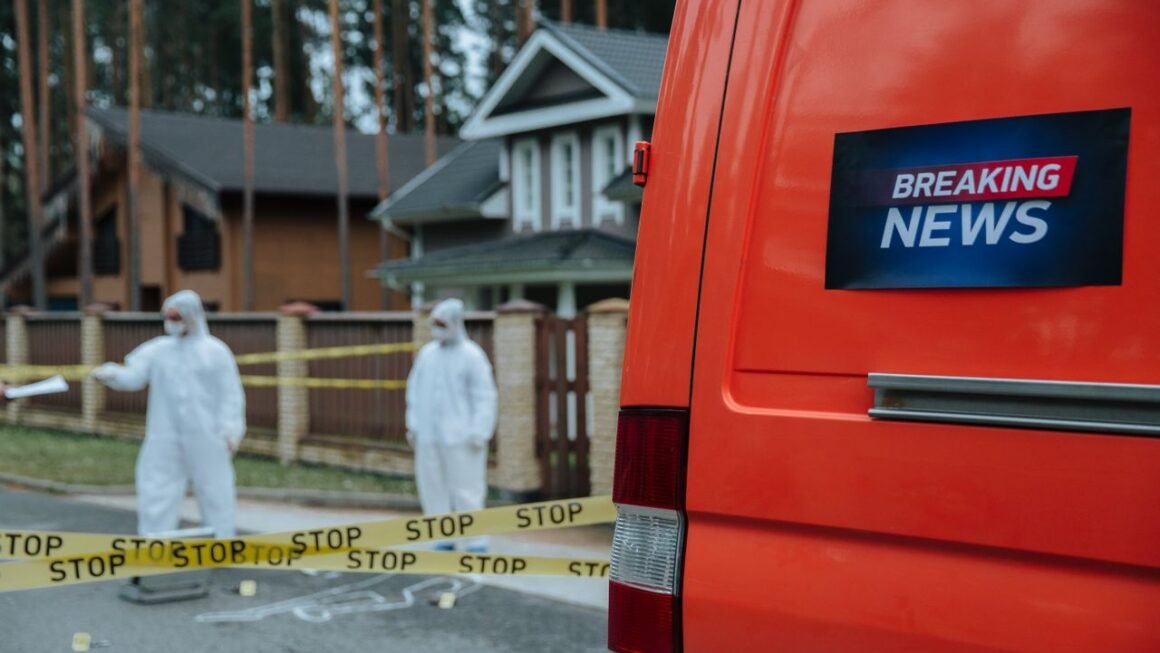
Third violent incident in five days leaves Saint-Michel residents on edge
A shooting and a stabbing that left a Montreal police officer injured mark the third violent incident tied to conjugal or domestic violence in Saint-Michel within a five-day span in late 2025, according to CTV News reporter Erin Seize. The neighbourhood has now recorded two femicides and one armed confrontation with police in under a week, and that clustering has residents questioning whether Saint-Michel is still the place they thought they knew. Maison d’Haïti, a local advocacy group, has since called publicly for stronger intervention against domestic violence, treating the killings not as isolated tragedies but as a pattern that needs a coordinated response from police, the borough, and the city.
Key takeaways
- Three violent incidents, including two femicides and one shooting/stabbing, occurred in Saint-Michel within five days, according to CTV News reporting.
- Residents near the affected blocks can register for Montreal’s borough alert notifications through Villeray-Saint-Michel-Parc-Extension’s website to stay informed of police activity in real time.
- Maison d’Haïti is pushing for expanded funding and faster intervention protocols for domestic violence cases; residents who want to support that push can contact the organization directly.
- Anyone at risk of conjugal violence can reach SOS violence conjugale (1-800-363-9010), which operates 24/7 across Quebec, including Montreal.
- SPVM’s public safety bulletins for Villeray-Saint-Michel-Parc-Extension are worth checking before deciding to relocate or change daily routines, since anecdotal fear doesn’t always match confirmed incident data.
Timeline of recent violent incidents in Saint-Michel
| Incident | Nature | Outcome |
|---|---|---|
| Femicide #1 | Domestic/conjugal violence | Woman killed |
| Femicide #2 (within 48 hours of #1) | Domestic/conjugal violence | Woman killed |
| Shooting and police stabbing | Armed confrontation, allegedly involving a neighbour | Man shot, officer stabbed and injured |
The table reflects the sequence reported across CTV News coverage of the neighbourhood in late 2025. All three events happened within five days of each other.
The shooting and police stabbing that alarmed residents
The most visible incident involved a man who was shot and a police officer who was allegedly stabbed by a next-door neighbour, according to CTV News. Saint-Michel resident Helicya Pellerin Larose was near the scene when it unfolded.
“It’s pretty traumatic,” Pellerin Larose told CTV News, describing her proximity to the incident.
Another resident interviewed by CTV News said he’s now looking to move to a different neighbourhood after learning his next-door neighbour was allegedly involved in the stabbing. What started as a domestic dispute ended in a confrontation with a police officer, and that alone has unsettled people on the block more than the count of incidents itself.
Two femicides within 48 hours: Maison d’Haïti’s response
Two women were killed in Saint-Michel within 48 hours of each other, prompting Maison d’Haïti to issue a public call for action against domestic violence. The organization, which serves Montreal’s Haitian community and has deep roots in Saint-Michel, framed the deaths as evidence that intervention is failing before conjugal violence turns lethal. Its statement didn’t treat the killings as unconnected tragedies but as part of a recurring pattern the organization says it has flagged before.
Why Saint-Michel safety concerns are intensifying now
The concern in Saint-Michel right now has less to do with random street crime and more to do with how fast these incidents piled up. Three violent events in five days is a short enough window that it outpaces how most people process even a single incident. That compression is what’s driving the anxiety in the district, more than any one act on its own.
Resident accounts: fear, relocation plans, daily disruptions
Proximity to violence seems to shape fear faster than any statistic does. Pellerin Larose’s account of being near the shooting and stabbing shows that directly. The resident weighing a move after learning his neighbour was allegedly involved in the stabbing shows a second, quieter effect: violence that touches your building or your block changes how you use your own front door, whether or not the broader crime rate has actually shifted.
Conjugal violence as a recurring pattern in the case data
All three incidents reported by CTV News trace back to conjugal or domestic violence, not stranger violence or property crime. That distinction matters. A neighbourhood dealing with a cluster of domestic violence cases faces a different risk than one seeing a spike in break-ins or street assaults, and it calls for a different response: intervention before disputes turn violent, rather than more street patrols.
Villeray-Saint-Michel-Parc-Extension crime in context
Saint-Michel sits within the Villeray-Saint-Michel-Parc-Extension borough, one of Montreal’s most densely populated and diverse districts. Crime concerns are not new to this borough, but residents and advocates are treating three violent incidents in five days as a departure from the norm rather than a continuation of it.
How the borough compares to other Montreal neighbourhoods
Montreal police don’t publish real-time, neighbourhood-level breakdowns that would allow a direct comparison of Saint-Michel’s 2025 violent crime rate against Villeray, Parc-Extension, or other boroughs. What exists is anecdotal, incident-based reporting, like the CTV News coverage cited here, rather than granular SPVM statistics broken out by micro-neighbourhood. That gap in publicly accessible data is part of what residents and Maison d’Haïti are now pushing city officials to address.
What SPVM data shows for 2025 versus prior years
Borough-wide SPVM figures for Villeray-Saint-Michel-Parc-Extension in 2025 weren’t detailed in the reporting reviewed for this article, and no year-over-year comparison specific to Saint-Michel has been made public in connection with these three incidents. Until SPVM or the borough releases a more granular breakdown, the two femicides and the shooting/stabbing remain the primary evidence residents and advocates are working from, not a confirmed statistical trend.
Community and institutional response
Maison d’Haïti’s public statement following the two femicides is the most concrete institutional response so far. The organization is positioning itself as an intermediary between affected families, the broader Haitian and Saint-Michel community, and city officials who set funding priorities for domestic violence prevention.
Maison d’Haïti’s call for greater action against domestic violence
The organization’s position is that reactive policing after a violent incident isn’t enough. It wants earlier intervention resources: outreach and support services that reach at-risk households before a dispute turns fatal, rather than after.
Borough and city officials’ statements and proposed measures
Specific statements or proposed measures from Villeray-Saint-Michel-Parc-Extension borough officials or City of Montreal representatives weren’t detailed in the coverage reviewed for this article. That absence stands out: five days that produced two femicides and a police stabbing have so far drawn a public response mainly from a community organization, not from the elected officials who oversee the borough.
What to expect for Montreal neighbourhood violence in 2026
How Montreal handles neighbourhood violence in 2026 will likely depend on how the city responds to this cluster of incidents in the coming months. If Maison d’Haïti’s call for action gains traction, expect proposals centered on domestic violence intervention funding rather than general street patrols, since all three incidents trace back to conjugal disputes rather than random violence.
Planned policing, funding, and prevention initiatives
No specific 2026 policing or funding initiatives tied directly to these Saint-Michel incidents have been publicly detailed as of this reporting. The clearest demand on record is Maison d’Haïti’s call for greater action against domestic violence, which points toward earlier-stage intervention programs and victim support funding rather than reactive law enforcement.
Gaps between resident concerns and current municipal response
There’s a gap worth watching between what residents are describing, fear, relocation plans, disrupted daily routines, and what officials have said publicly, which based on available reporting is limited. Residents like Pellerin Larose and the neighbour weighing a move are responding to lived experience in real time. Municipal and borough responses, by contrast, still appear to be forming, with Maison d’Haïti currently carrying most of the public advocacy on behalf of the community.
Frequently asked questions
What sparked the recent wave of violence in Saint-Michel?
Three incidents within five days triggered the current concern: two femicides within 48 hours of each other, followed by a shooting and police stabbing allegedly involving a neighbour dispute, according to CTV News reporting by Erin Seize.
Is Saint-Michel more dangerous than other Montreal neighbourhoods?
There’s no publicly available, granular SPVM data comparing Saint-Michel’s 2025 violent crime rate directly against other neighbourhoods within Villeray-Saint-Michel-Parc-Extension or elsewhere in Montreal. The recent concern stems from a documented cluster of three incidents in five days, not a confirmed long-term statistical trend.
What is Maison d’Haïti asking authorities to do?
Maison d’Haïti is calling for greater action against domestic violence following the two Saint-Michel femicides, pushing for earlier intervention and stronger support resources for at-risk households rather than a purely reactive policing response.
How are Saint-Michel residents responding to the safety concerns?
Some residents report direct trauma from proximity to the incidents, as Helicya Pellerin Larose described to CTV News. Others, including a resident whose next-door neighbour was allegedly involved in the police stabbing, are actively considering relocating to a different neighbourhood.
What resources exist for victims of conjugal violence in Montreal?
SOS violence conjugale operates a 24/7 confidential line at 1-800-363-9010 for anyone in Quebec, including Montreal, experiencing conjugal violence. Community organizations such as Maison d’Haïti also provide localized support and advocacy for residents in Saint-Michel specifically.
If these incidents have changed how you move through your own neighbourhood, don’t wait on a citywide statistic to confirm what you already sense. Register for borough safety alerts, keep the SOS violence conjugale number on hand, and if you have information related to any of these three cases, contact SPVM directly rather than relying on secondhand accounts from neighbours.