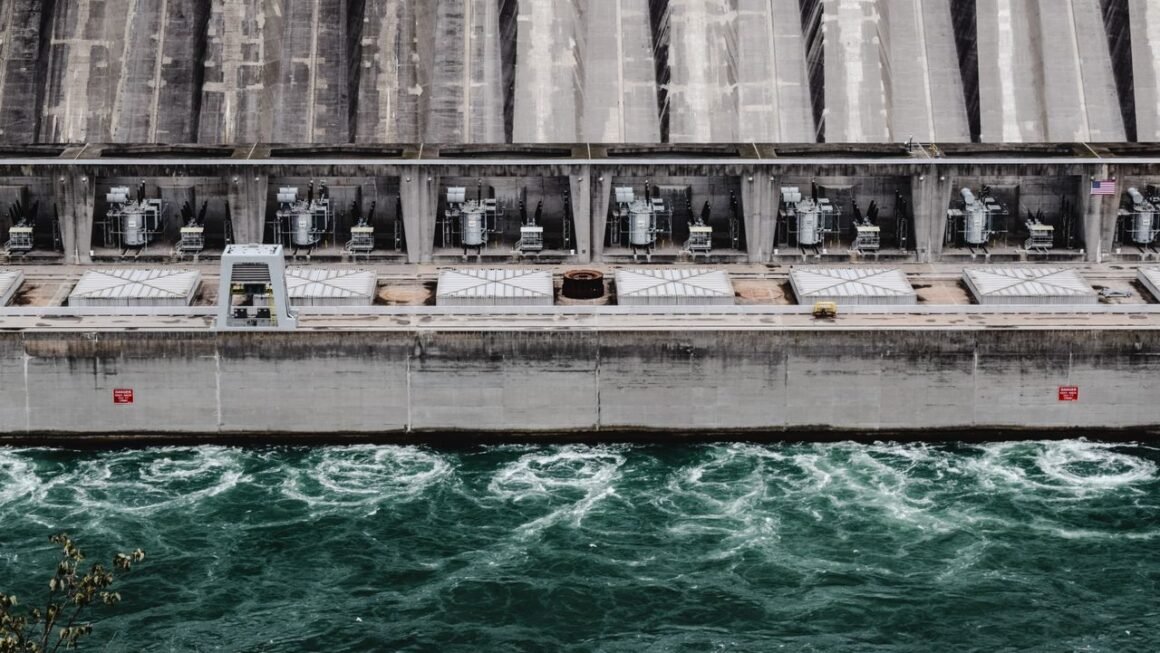
Quebec and Newfoundland and Labrador sign new Churchill Falls power deal worth billions
Quebec and Newfoundland and Labrador have signed a new agreement covering the Churchill Falls hydroelectric plant, replacing a 1969 contract that critics have called one of the worst energy deals in Canadian history. The tentative deal, announced in August 2026, sets a new price for Quebec’s electricity purchases, opens the door to more than 10,000 megawatts of expanded generation capacity, and creates a rebate program for Labrador ratepayers.
This deal is not yet law. It remains non-binding, with the provinces and Ottawa working toward final, legally enforceable agreements by the end of 2026, according to reporting on the announcement. Until that paperwork closes, the terms described below are an agreed framework, not a signed contract.
The stakes are large. The original 1969 contract locked in a fixed price for electricity that stayed nearly flat for decades while Quebec resold the power at market rates, earning enormous profit while Newfoundland and Labrador received a fraction of the value. The new arrangement tries to correct that imbalance through a pricing formula tied to production growth, annual increases, and direct compensation to the province hosting the dam.
Key takeaways from the 2026 Churchill Falls agreement
- Quebec will pay an average of roughly 6 cents per kilowatt hour initially, rising over the life of the contract to an effective average of about 7.4 cents per kilowatt hour across 50 years.
- The deal includes a 14% annual price increase for 15 years, running from 2026 through 2041, before the rate structure stabilizes.
- Expansion plans could push Churchill Falls’ generation capacity past 10,000 megawatts, up from its current output, through new infrastructure investment.
- The Churchill River Electricity Rebate will direct a portion of new revenue back to Labrador ratepayers, though final distribution mechanics are still being worked out.
- Nothing is legally binding yet. If you are a ratepayer, business owner, or investor watching this file, treat 2026 as the year for final contract language, not implementation.
What’s inside the new 50-year Hydro-Québec Churchill Falls deal
The core of the agreement is a new Hydro-Québec Churchill Falls deal that replaces the fixed pricing of 1969 with a schedule designed to track inflation and production growth over the next half century. That single change addresses the central complaint Newfoundland and Labrador has raised for decades: a 65-year contract signed before modern inflation-indexing practices left the province locked into prices set in another economic era.
Pricing structure: from 6 cents to 7.4 cents per kilowatt hour
Quebec will pay an average of six cents per kilowatt hour under the new terms, according to an explainer on the deal published in August 2026. That figure is the starting point. Over the full 50-year term, the price structure works out to an effective average of roughly 7.4 cents per kilowatt hour once scheduled increases are factored in, according to reporting on the signing.
That gap between six and 7.4 cents matters because it comes from a deliberate escalation clause rather than a flat rate. Under the 1969 deal, Quebec paid a fixed price that barely moved for decades even as electricity prices across North America climbed. The new structure is built to avoid repeating that mistake.
The 14% annual increase and what it means through 2041
The agreement includes a 14% yearly price increase for 15 years, covering 2026 through 2041. That is a steep annual climb by utility standards, and it front-loads much of the financial benefit to Newfoundland and Labrador in the earlier years of the contract rather than spreading gains evenly across five decades.
A 14% compounding increase over 15 years multiplies the starting price several times over by 2041. After that point, the rate of increase is expected to slow, settling into the long-term average that produces the 7.4-cent figure across the full term.
| Contract feature | 1969 agreement | 2026 agreement |
|---|---|---|
| Term length | 65 years | 50 years |
| Starting price | Roughly 0.2 to 0.3 cents/kWh | Approximately 6 cents/kWh |
| Price escalation | Minimal, fixed for decades | 14% annually for 15 years (2026-2041) |
| Average effective price | Well below market value by contract’s end | Approximately 7.4 cents/kWh over 50 years |
| Capacity | Approximately 5,428 MW | Potential expansion past 10,000 MW |
| Ratepayer rebate | None | Churchill River Electricity Rebate |
Expansion plans and the push toward 10,000 megawatts
Quebec will also gain access to a potential of more than 10,000 megawatts of capacity, according to the explainer covering the deal’s terms. That figure roughly doubles the plant’s existing output and depends on new infrastructure being built at the Churchill Falls site, not simply a reallocation of current generation.
Expansion at this scale requires new transmission lines, upgraded generating stations, and coordination between provincial utilities and federal financing partners. Watch for construction timelines and cost estimates to firm up once the binding agreements are finalized later in 2026.
Why the original 1969 Churchill Falls contract still matters
The 1969 contract is the reason this renegotiation carries so much political weight. Signed when Newfoundland and Labrador needed capital to build the massive underground powerhouse at Churchill Falls, the deal committed the province to selling almost all the plant’s output to Hydro-Québec at a fixed price for 65 years.
How a fixed-price deal cost Newfoundland and Labrador billions
That fixed price never adjusted meaningfully for inflation or rising electricity values. As decades passed, Quebec resold Churchill Falls power into domestic and export markets at rates far above what it paid Newfoundland and Labrador, earning billions in profit that stayed almost entirely on the Quebec side of the ledger. Estimates of the value transferred from Newfoundland and Labrador to Quebec over the life of the contract run into the tens of billions of dollars, a gap that became the defining grievance of Newfoundland and Labrador’s energy politics for two generations.
The legal battles that forced Quebec back to the table
Newfoundland and Labrador challenged the 1969 contract repeatedly in court, arguing the terms were unconscionable given how far market prices had diverged from the fixed rate. Those legal challenges largely failed on contract law grounds, since the agreement was validly signed and Quebec had no legal obligation to renegotiate voluntarily.
What ultimately changed the calculus was not litigation but leverage. Newfoundland and Labrador’s development of the Muskrat Falls project and its own transmission alternatives gave the province a stronger bargaining position heading into talks, while Quebec’s growing electricity demand made securing a stable, long-term Churchill Falls supply increasingly valuable. That shift in mutual interest, more than any court ruling, is what brought both sides back to the negotiating table.
Inside the Quebec-Newfoundland Labrador energy agreement negotiations
Talks over the Quebec Newfoundland Labrador energy agreement were described as tense by people familiar with the process, according to reporting on the non-binding deal’s announcement. Multiple rounds of negotiation stretched over an extended period before officials reached the framework announced in August 2026.
“The renegotiated but non-binding deal promises to boost energy production at the Churchill Falls hydroelectric facilities,” according to coverage of the announcement.
Ottawa’s role and federal financial backing
The federal government is directly involved in this deal, not simply as an observer. Ottawa, Newfoundland and Labrador, Quebec, and their respective utilities have all been working together to negotiate the new arrangement, according to reporting on the talks. Federal backing is expected to help finance the expansion infrastructure needed to push capacity toward 10,000 megawatts, making this a federally backed deal in practical terms even though the core contract sits between two provinces.
That financial backing matters because expansion at Churchill Falls requires capital investment on a scale that neither province can easily absorb alone. Federal loan guarantees or direct contributions would reduce the risk premium either utility faces when borrowing for major transmission and generation upgrades.
Why the deal remains non-binding until late 2026
Treat everything announced so far as a framework, not a contract. The agreement is not yet legally binding, with final agreements expected to be completed by the end of 2026, according to breaking coverage of the announcement. That gap between announcement and enforceability exists because a deal of this scale involves multiple legal instruments: power purchase agreements, infrastructure financing arrangements, and likely provincial legislation in both Quebec and Newfoundland and Labrador.
Until those documents are signed, either side retains room to push for adjustments. Given how contentious the original 1969 deal remains in Newfoundland and Labrador’s political memory, expect continued scrutiny of the fine print before final signatures.
The Churchill River Electricity Rebate and what it means for ratepayers
The Churchill River Electricity Rebate is the mechanism designed to return a share of new Churchill Falls revenue directly to residents of Labrador. Unlike the 1969 contract, which sent essentially all downstream profit to Quebec, this rebate structure is built so local ratepayers see a tangible benefit from a resource generated in their own backyard.
Who qualifies and how the rebate will be distributed
Details on eligibility and distribution mechanics are still being finalized as part of the broader non-binding agreement. What is clear is that the rebate is tied specifically to Churchill River generation revenue and is intended for Labrador ratepayers, distinguishing it from general provincial revenue that might otherwise be absorbed into Newfoundland and Labrador’s broader budget. If you live in the region, expect further announcements on eligibility criteria and payment timing as the binding agreements take shape later in 2026.
Political reaction in St. John’s and Quebec City
Reaction in St. John’s has been cautiously positive, with officials framing the deal as a long-overdue correction to the imbalance of 1969, though some critics argue the rebate and pricing terms still favor Quebec’s long-term interests given the scale of capacity Quebec gains access to. In Quebec City, officials have emphasized the deal’s role in securing long-term, predictable electricity supply as the province faces rising domestic and export demand.
Economic and political stakes for both provinces
Both provinces have framed this deal as central to their economic futures, and the political stakes extend well beyond the electricity sector itself.
Labrador’s jobs, infrastructure, and transmission upgrades
Expansion toward 10,000 megawatts means new construction jobs, transmission upgrades, and long-term maintenance work concentrated in Labrador. For a region whose economy has historically depended on resource extraction and hydroelectric employment, a multi-year buildout tied to the Churchill Falls plant is one of the largest infrastructure commitments in the province’s recent history.
Quebec’s long-term electricity supply strategy
Quebec’s motivation is different but equally strategic. Hydro-Québec faces growing demand from electrification initiatives, data centers, and export contracts with neighboring U.S. states. Locking in Churchill Falls supply for another 50 years, even at a higher price than 1969, gives Quebec’s system operator long-term certainty over a resource that already accounts for a substantial share of its generation capacity.
Frequently Asked Questions
What is the Churchill Falls deal?
It is a renegotiated, non-binding agreement between Quebec, Newfoundland and Labrador, and the federal government that replaces the original 1969 contract governing the Churchill Falls hydroelectric plant in Labrador. It sets new pricing, expansion plans, and a ratepayer rebate ahead of final, legally binding agreements expected by the end of 2026.
Who paid for Churchill Falls?
Newfoundland and Labrador financed the original construction of the Churchill Falls plant in the 1960s, taking on significant debt to build the underground powerhouse. Quebec provided the market and transmission access needed to make the project financially viable, which is why the 1969 contract tied so much value to Quebec’s purchase terms.
How much does Quebec pay for Churchill Falls power?
Under the new 2026 agreement, Quebec will pay an average of roughly 6 cents per kilowatt hour to start, rising through a 14% annual increase between 2026 and 2041, before settling into an effective average of about 7.4 cents per kilowatt hour across the full 50-year term.
How much did Churchill Falls cost to build?
Historical accounts place the original construction cost of the Churchill Falls plant in the range of nearly $1 billion in 1960s and 1970s dollars, a substantial sum that required Quebec’s long-term purchase commitment to secure financing at the time.
When will the new Churchill Falls agreement become legally binding?
The current framework is non-binding. Final, enforceable agreements between Quebec, Newfoundland and Labrador, and Ottawa are expected to be completed by the end of 2026, according to coverage of the announcement. Until those documents are signed, the pricing, expansion, and rebate terms described here remain subject to change.