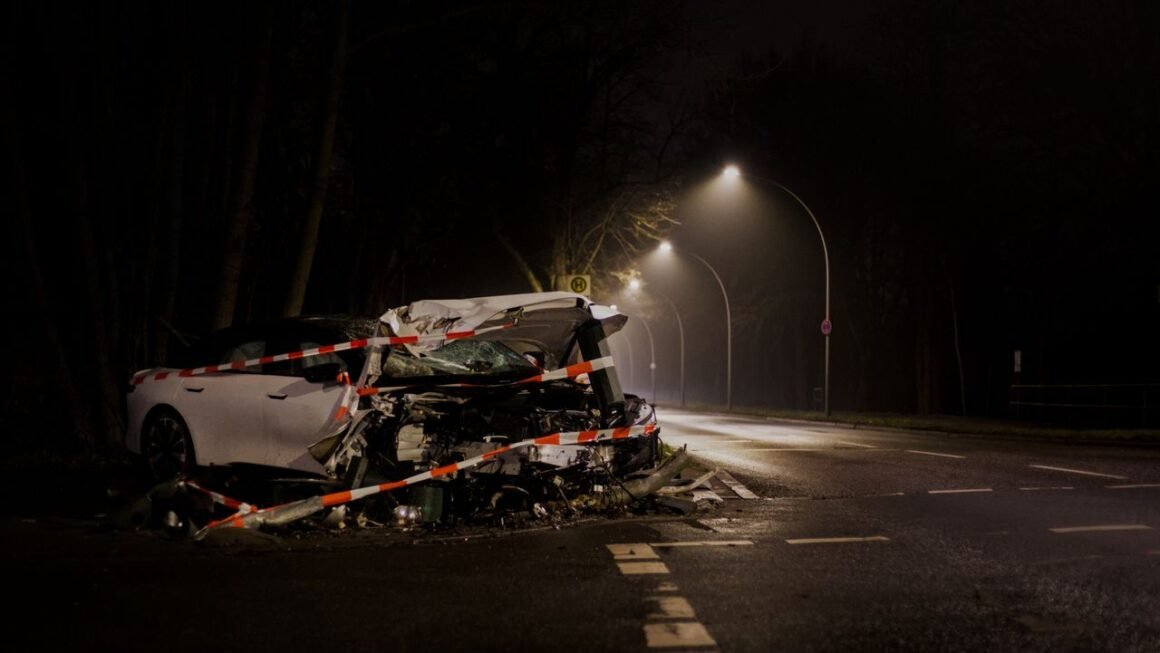
Two people died last week when a car crashed into a gym in Laval, Quebec, after police tried to stop the vehicle for driving without a licence plate. For several days afterward, Quebec’s police watchdog, the Bureau des enquêtes indépendantes (BEI), did not open a file on the case. That changed only after the mother of one of the victims, a 19-year-old woman, publicly demanded an independent review. The case raises a direct question about how Quebec decides which police-involved deaths get outside scrutiny, and which ones don’t.
Key takeaways
- The BEI launched its investigation into the Laval gym crash only after public pressure from the victim’s family, not automatically when the deaths occurred.
- Quebec law requires a BEI probe whenever a police intervention results in death or serious injury, but the initial classification of this incident as a non-qualifying pursuit delayed that trigger.
- Five investigators, working with Sûreté du Québec (SQ) support, are the standard staffing level for these Laval-area cases, based on the parallel shoplifting-crash probe.
- If you or a family member are involved in a police pursuit incident in Quebec, you can request a standard accident report from the local police service (in Laval, for $19 payable to Ville de Laval) separately from any BEI file, since the two processes serve different purposes.
- Expect BEI investigations to take months, not weeks. The Bureau’s own case history shows multi-month timelines before a report goes to the Director of Criminal and Penal Prosecutions (DPCP).
What happened outside the Laval gym on the night of the crash
Laval police tried to pull over a vehicle that was travelling without a licence plate. Instead of stopping, the driver fled. The car crashed into a gym building, killing two people inside the vehicle, according to CBC News. Laval police confirmed the basic sequence: an attempted traffic stop, a vehicle that didn’t comply, and a collision with fatal results.
“Two people died in a car crash in Laval, Que., after police attempted to stop a vehicle travelling without a licence plate.” (CBC News)
That single sentence carries most of what has been officially confirmed. What isn’t yet public is exactly how long the pursuit lasted, how fast the vehicle was travelling when it struck the building, or what, if any, physical contact occurred between the police cruiser and the fleeing car before impact. Those are the details an independent investigation is meant to establish.
Timeline: from the licence-plate stop to the fatal collision
Police first identified the vehicle as lacking a licence plate, a routine trigger for a traffic stop. The driver did not pull over. Within a short span, the car left the roadway and struck the gym, a commercial building not built to absorb a vehicle impact at speed. Both occupants died as a result of the collision. Laval police opened a standard crash investigation immediately, the kind that generates the same report you could request from the Service de police de Laval for a routine accident. What did not happen immediately was a BEI file, and that gap became the story.
Who died: the 19-year-old victim and the second passenger
One victim was a 19-year-old woman. Her mother came forward publicly to say the death deserved independent scrutiny, not just an internal police report. A second person in the vehicle also died in the crash. Neither victim’s full identity nor their relationship to the driver, if the driver was among the deceased, has been detailed in the reporting available so far. The family’s public statement is what shifted the case from a local traffic fatality into a provincial watchdog matter.
Why the BEI wasn’t initially called in
The BEI did not open an investigation in the immediate aftermath, despite two deaths connected to a police-initiated stop. That is the detail that drove questions about why Quebec’s police watchdog wasn’t investigating, and it wasn’t an oversight buried in paperwork. It came down to how the incident was initially classified.
The mandate gap that delayed an independent probe
The BEI’s mandate activates automatically when a police intervention results in death, serious injury, or the discharge of a firearm by an officer. The disputed question in the Laval case was whether the attempted stop and subsequent crash counted as a qualifying “intervention” under that definition, given that officers had not made physical contact with the vehicle and the crash occurred after the car fled. That classification decision, made in the hours after the crash, is what kept the file with Laval police rather than automatically routing it to the BEI.
Family pressure and public backlash that forced a reversal
The victim’s mother went public asking for an independent review, and that pressure, combined with media coverage questioning the initial decision, led the BEI to reverse course. Quebec’s police watchdog mandate is supposed to remove ambiguity from these calls, but the Laval case shows that classifying an incident as a “pursuit” versus a routine crash can still delay the trigger, at least until public scrutiny forces a second look.
Inside the Bureau des enquêtes indépendantes’ mandate
The BEI exists specifically so that police forces don’t investigate their own members after serious incidents. It’s a civilian body, independent of any municipal or provincial police service, created to handle exactly the kind of case Laval produced: a death connected to police action.
When Quebec law requires a BEI investigation
Under Quebec’s Police Act, the BEI must investigate any incident where a police intervention causes death or serious injury to a civilian, regardless of which police force was involved. The mandate also covers officer-involved shootings and, in some circumstances, deaths in custody. The Laval gym crash falls into a grey zone the law doesn’t spell out in detail: a fleeing vehicle, no physical contact from police, but a stop attempt that directly preceded the fatal outcome. That’s the same grey zone that shaped the initial delay.
How the five-investigator team is structured on this case
Comparable BEI files in the Laval area have used five to six investigators, supported by SQ personnel who assist with technical reconstruction and evidence collection. The parallel shoplifting-related crash investigation in Laval, for instance, was assigned five investigators with SQ support. That staffing pattern gives a rough benchmark for what the gym crash file will likely look like once formally underway, though the BEI hasn’t published exact investigator numbers for this specific case yet.
How the Laval case compares to other recent BEI investigations
Laval has generated more than one BEI file in recent months, and comparing them shows something about how consistently the mandate gets applied.
| Case | Trigger | Investigators assigned | Status |
|---|---|---|---|
| Laval gym crash (this case) | Attempted stop for missing licence plate, fleeing vehicle crashed | Not yet detailed; opened after public pressure | Ongoing |
| Laval shoplifting-related crash | Alleged shoplifting incident, vehicle pursuit ended in collision | 5 investigators, with SQ support | Ongoing |
| 15-year-old injured in Laval police chase | Police chase resulted in serious injury to a minor | 6 investigators, with SQ support | Ongoing |
The Laval shoplifting-related crash probe
In a separate Laval case, the BEI opened an investigation into a crash connected to an alleged shoplifting incident. Five investigators were assigned, working alongside the SQ, according to reporting on that file. Unlike the gym crash, the BEI’s involvement there was immediate, not delayed by a classification dispute. That contrast is part of why the gym crash drew scrutiny: two cases in the same city, both involving vehicles and police activity, handled on different timelines.
The 15-year-old injured in a separate Laval police chase
A 15-year-old was seriously injured during a police chase in Laval in another recent incident. Six BEI investigators were assigned, again with Sûreté du Québec assistance, according to coverage of that case. A minor’s serious injury during an active chase met the mandate’s threshold without the same delay seen in the gym crash file. That suggests direct police contact or an active pursuit tends to trigger faster BEI engagement than a stop attempt followed by a crash after the vehicle fled.
What happens next in the investigation process
Now that the BEI has taken the file, expect a methodical, evidence-heavy process rather than a quick public update. Investigators will gather dashcam and bodycam footage if available, interview witnesses and involved officers, and build a technical reconstruction of the crash with SQ support.
Typical timeline for a BEI probe to conclude
BEI investigations commonly take several months from launch to a final report. Complex cases involving vehicle reconstruction, like this one, tend toward the longer end of that range because investigators need collision analysis, toxicology where relevant, and a full account of the radio communications and decisions made by officers during the attempted stop.
Possible outcomes: SQ referral, prosecution, or no charges
Once the BEI completes its report, it goes to the Director of Criminal and Penal Prosecutions, which decides whether charges are warranted against any officer involved. Outcomes in comparable Quebec cases have ranged from no charges being laid, to referrals for further review, to formal prosecution in rarer instances. Until the DPCP receives and reviews the file, no legal determination about the officers’ conduct in the Laval stop can be made public.
Frequently asked questions
What happened in Laval?
Police tried to stop a vehicle travelling without a licence plate. The driver fled, and the vehicle crashed into a gym, killing two people, according to CBC News and Laval police.
What were the victim’s last words?
No last words have been publicly reported by police, the family, or news outlets covering the case. If you’ve seen this claim circulating, it isn’t confirmed by any source in the current reporting.
How long do crash investigations take?
Standard police accident reports, like the ones the Service de police de Laval issues for a $19 fee, are typically available within days to weeks. A BEI independent investigation runs far longer, often several months, because it involves witness interviews, technical reconstruction, and a formal report to the DPCP.
What is a crash investigation?
A crash investigation establishes how a collision occurred: vehicle speeds, points of impact, driver actions, and any external factors like a police pursuit. A routine crash investigation, filed by local police, differs from a BEI investigation, which specifically examines whether police conduct contributed to a death or serious injury.
Why didn’t the BEI investigate right away?
The initial classification of the incident didn’t clearly meet the threshold for a mandatory BEI investigation, since officers hadn’t made physical contact with the fleeing vehicle before the crash. The Bureau opened its file only after the victim’s mother spoke publicly and pressure mounted for an independent review.
If you’re tracking this case, the number to watch isn’t the death toll, it’s the investigator count and timeline the BEI eventually publishes. Compare that against the five- and six-investigator staffing seen in Laval’s other recent files, and you’ll have a concrete benchmark for whether this investigation is getting the same resourcing, or less.