
In the 2021 federal election, the Bloc Québécois won 32 seats in Quebec. This is impressive, given they only ran in one province. It shows how deeply rooted this party is in Quebec.
The Bloc Québécois has a big impact in Ottawa. It fights for Quebec’s unique identity and interests. Its voice is heard, even when no party has a majority.
In minority governments, the Bloc has a lot of power. Their votes can decide the fate of important laws. This means they play a big role in shaping Canada’s policies, from immigration to health care.
The party’s influence goes beyond just voting. It makes other parties listen to Quebec’s needs. Whether it’s about language or money, the Bloc keeps Quebec’s voice loud in national debates.
So, how did this single-province party become so influential? It’s thanks to strong leadership, changing alliances, and Quebec’s determination to be heard.
Key Takeaways
- The Bloc Québécois remains a powerful voice for Quebec’s interests at the federal level.
- As a federal political party running only in Quebec, it wins enough seats to influence Parliament.
- Minority governments give the Bloc significant leverage over legislation.
- Quebec sovereignty and cultural identity sit at the core of the party’s platform.
- The Bloc pushes other national parties to address Quebec-specific concerns more seriously.
- Its role in Canadian politics continues to grow during periods of parliamentary instability.
The Rise of the Bloc Québécois in Federal Politics
The Bloc Québécois has made a big comeback in recent federal elections. Once seen as a fading force, this party has regained its strength in the House of Commons. They now have a clear purpose and energy.
In the 2019 federal election, the party’s seats jumped from 10 to 32. By 2021, they had 33 seats. This shows Quebecers want a strong voice in Ottawa. Each Bloc MP fights for Quebec’s interests, like language protection and fair funding.
The party’s appeal comes from a long tradition. The separatist movement in Quebec never went away. It just changed. People who feel left out by other parties see the Bloc as their champion. They focus on immigration policy, cultural funding, and provincial autonomy.
Their position in a minority Parliament gives them power. They can support or oppose bills, trading votes for policies that help Quebec. This makes every Bloc MP important in negotiations.
| Election Year | Seats Won | Popular Vote in Quebec |
|---|---|---|
| 2015 | 10 | 19.3% |
| 2019 | 32 | 32.5% |
| 2021 | 33 | 32.1% |
This comeback shows the Bloc Québécois is more than just a party. It’s a voice for Quebec’s identity. The separatist movement may have changed, but the Bloc remains a key player in Canada’s politics.
Yves-François Blanchet’s Leadership Vision
Yves-François Blanchet took over the Bloc Québécois in 2019. He brought a new, practical way of thinking that many Quebecers like. Instead of focusing on Quebec independence right away, he works on protecting Quebec’s interests in Ottawa.
He mixes environmental advocacy with defending Quebec’s culture and language. This mix attracts young voters and keeps old supporters on board. Blanchet sees Quebec independence as a step towards better governance, not just a dream.
His vision has several key points:
- He fights for Quebec’s control over immigration and language laws
- He supports green energy, using Quebec’s hydroelectric power
- He backs secularism, like Bill 21
- He makes sure Quebec gets fair funding for social programs
His strategy has worked well at the polls. The Bloc did great in the 2019 and 2021 elections, winning back lost seats.
| Federal Election | Bloc Seats Won | Popular Vote in Quebec |
|---|---|---|
| 2015 (pre-Blanchet) | 10 | 19.3% |
| 2019 | 32 | 32.5% |
| 2021 | 32 | 32.1% |
Yves-François Blanchet keeps Quebec independence alive while focusing on real results. This makes the Bloc a relevant and powerful force in Canadian politics. His plan helps the party grow closer to Quebec’s sovereignty movements.
Quebec Sovereignty and the Federal Political Landscape
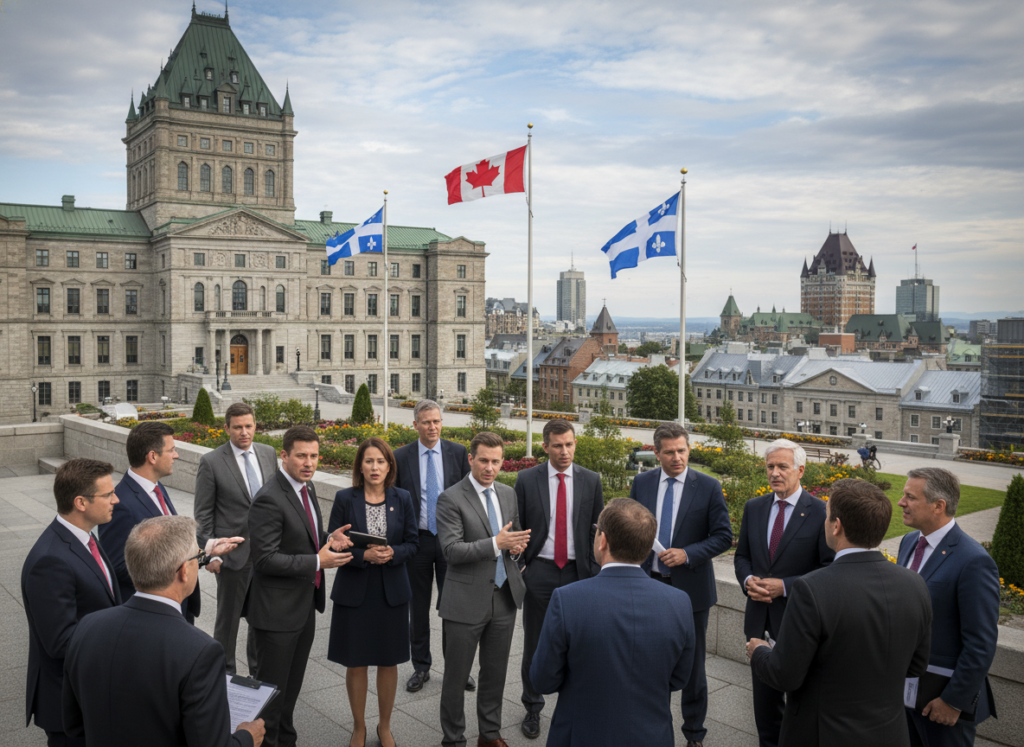
The debate on Quebec sovereignty is central to the Bloc Québécois. It influences every policy and promise they make in Ottawa. The Bloc has moved from just seeking a referendum to pushing for more provincial control within Canada.
As a federal party, the Bloc acts as Quebec’s watchdog in Ottawa. They carefully review laws to ensure they respect Quebec’s rights. They focus on:
- Immigration policy and Quebec’s right to choose its own newcomers
- Protecting the French language and Québécois culture
- Environmental rules that match Quebec’s climate goals
- Respecting Quebec’s unique society status in Canada
This stance appeals to many Quebecers who don’t want full independence but want a strong voice in Ottawa. The Bloc sees sovereignty as a range, from full independence to significant self-rule within Canada.
| Policy Area | Federal Government Approach | Bloc Québécois Position |
|---|---|---|
| Immigration | Centralized targets set by Ottawa | Full provincial control over selection |
| Language Policy | Official bilingualism nationwide | Strengthen Bill 101 protections federally |
| Environment | National carbon pricing | Respect Quebec’s own cap-and-trade system |
| Health Care | Federal transfers with conditions | Unconditional funding increases |
The Bloc’s stance makes it the only party focused exclusively on Quebec’s interests. This unique role helps bridge the gap between Quebec’s goals and federal actions.
The Bloc Québécois and Its Relationship with Provincial Politics

The Bloc Québécois is a key player in Canadian politics. It fights for Quebec’s interests in Ottawa. Its provincial cousin, the Parti Québécois, does the same in Quebec City. Both parties aim for sovereignty, but they work in very different political arenas with unique strategies.
The Parti Québécois pushes for independence in the National Assembly of Quebec. The Bloc does the same at the federal level. Even though they share goals, their methods can differ. The Bloc deals with Ottawa’s minority governments, while the Parti Québécois focuses on provincial issues.
The Bloc supports Quebec’s positions on federal-provincial issues. This includes debates on fiscal transfers, health-care funding, and constitutional recognition. It acts as Quebec’s voice against Ottawa’s overreach.
Here is a quick look at how these two parties compare:
| Feature | Bloc Québécois | Parti Québécois |
|---|---|---|
| Level of Government | Federal (House of Commons) | Provincial (National Assembly of Quebec) |
| Founded | 1991 | 1968 |
| Core Mission | Defend Quebec interests in Ottawa | Achieve Quebec sovereignty |
| Current Leader | Yves-François Blanchet | Paul St-Pierre Plamondon |
| Key Focus Areas | Federal transfers, language rights, constitutional matters | Provincial governance, independence referendums, cultural policy |
This partnership gives Quebec a two-pronged approach to advancing its political goals. Their work on sovereignty keeps the movement alive in Canadian politics.
Impact of Bloc MPs on Canadian Policy Making
Every Bloc MP elected to the House of Commons has a special role. They speak for Quebec’s interests in Ottawa. This role shapes debates, committee work, and key votes in surprising ways.
In parliamentary committees, Bloc MPs focus on Quebec’s key issues. These include language protection legislation, agricultural supply management, and cultural funding. Their efforts ensure Quebec’s voice is heard across the country.
The Bloc’s power grows in minority parliaments. When no party has a majority, Bloc votes can decide budgets and confidence motions. This means they have more influence than their number of seats. They’ve made a big difference in areas like:
- Strengthening the Official Languages Act through Bill C-13
- Defending Quebec’s dairy and poultry farmers under supply management
- Pushing for stronger environmental protections tied to provincial jurisdiction
- Advocating for increased health-care transfers with no federal strings attached
Critics often see the Bloc as just a separatist movement. But this view is wrong. The party’s federal wing plays a key role in shaping laws that affect all Canadians, not just Quebecers.
| Parliament Type | Bloc Influence Level | Example Impact |
|---|---|---|
| Majority Government | Limited | Committee amendments on language policy |
| Minority Government | High | Deciding votes on budgets and confidence motions |
As the Bloc continues to hold seats in Ottawa, its members are pivotal players in Canadian democracy. Their influence on policy making goes beyond Quebec’s borders.
Conclusion
The Bloc Québécois remains a strong voice for Quebec in Ottawa. It combines regional pride with political action. Quebec voters trust the party to fight for their interests.
Yves-François Blanchet has led the Bloc Québécois to influence national debates. They focus on issues like language and healthcare. This keeps them relevant in Canadian politics.
As Canada’s politics evolve, the Bloc Québécois will play a bigger role. It’s not just a local party. It makes sure Quebec’s voice is heard in all major discussions.