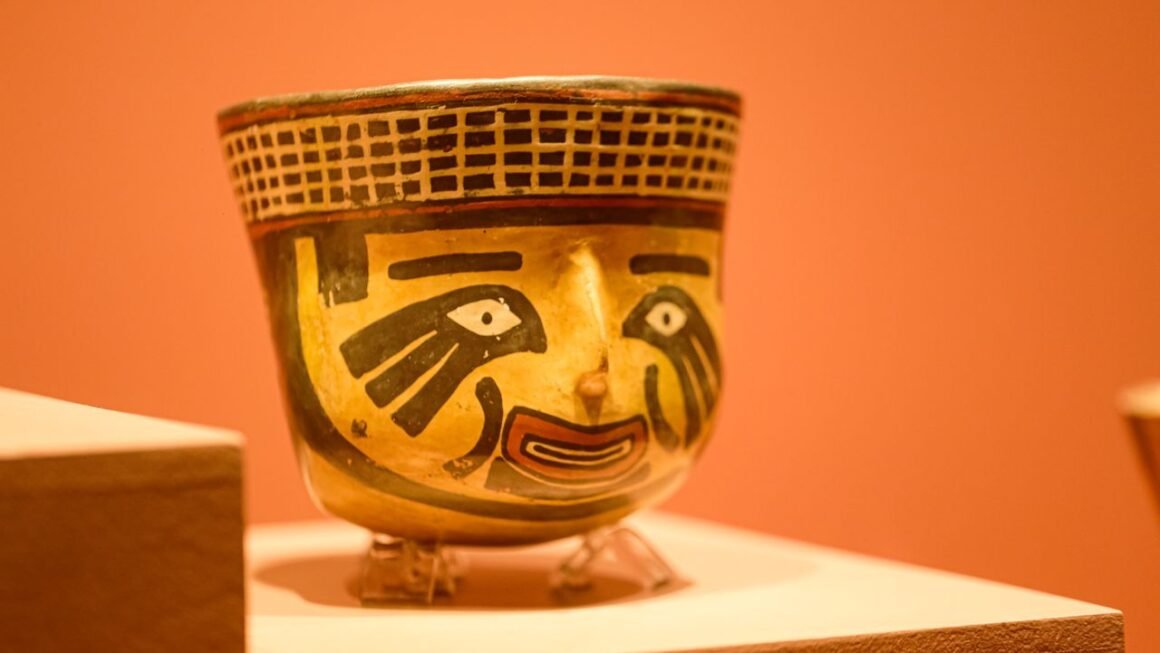
2,000-year-old Nasca-style bowl seized from Montreal auction house returned to Peru
A pre-Hispanic ceramic bowl, believed to be roughly 2,000 years old, has been returned to Peru after it surfaced for sale at a Montreal auction house. The Royal Canadian Mounted Police helped coordinate the recovery, working with Peruvian consular officials to confirm the bowl’s origin and arrange its handover. The case moved from an auction catalogue listing to an international repatriation in a matter of months, showing how easily antiquities can slip through the market even in a country with cultural property law already on the books.
The piece is a Nasca-style bowl, a category of pottery produced by the Nasca culture that flourished on Peru’s southern coast between roughly 100 BCE and 800 CE. Its reappearance in a Canadian sale room, according to reporting from the Montreal Gazette, triggered a review process that ended with the piece back on Peruvian soil.
Key takeaways
- If you’re buying pre-Columbian pottery, ceramics, or textiles at auction, ask for documented export permits from the country of origin, not just a vague provenance note. The absence of paperwork is itself a red flag.
- Auction houses operating in Canada are expected to screen listings against Cultural Property Export and Import Act criteria before a sale goes live, not after a government agency intervenes.
- Report suspected looted antiquities to the RCMP’s Art Crime and Cultural Heritage Crime program directly. Cases resolved through voluntary surrender move faster and avoid drawn-out seizure litigation.
- Nasca-style pottery has identifiable stylistic markers (polychrome slip painting, specific vessel shapes) that specialists and even trained auction staff can flag before a listing goes public.
- Countries of origin, including Peru, increasingly rely on bilateral cooperation and UNESCO 1970 Convention mechanisms rather than lengthy court battles to recover cultural property, so buyers should expect faster repatriation timelines going forward.
How the bowl surfaced at a Montreal auction house
Auction house alerted authorities after cataloguing the artifact
The bowl entered public view the way many disputed antiquities do: through a routine auction listing. Once cataloguing staff or outside reviewers flagged the object’s likely origin and age, the auction house notified authorities rather than proceeding with the sale. That single decision shaped the rest of the case. Had the bowl sold quietly to a private collector, tracing it back to Peru would have been far harder, if not impossible.
This pattern, an auction house self-reporting rather than a customs agent catching the item at a border, is increasingly common in North American markets. Auction houses face reputational and legal exposure if they’re later found to have knowingly sold looted cultural property, which gives them an incentive to flag questionable pieces early.
Identifying markers of Nasca-style pottery
Nasca ceramics are distinctive enough that trained eyes can often identify them without lab testing. Typical features include polychrome slip decoration in earthy reds, blacks, and creams, along with stylized imagery of animals, plants, and mythological figures painted directly onto the vessel before firing. Shapes tend toward double-spout bottles, effigy vessels, and shallow bowls like the one recovered in Montreal.
These stylistic signatures let specialists flag suspect pieces quickly, but they also make Nasca pottery attractive to traffickers precisely because it’s recognizable and collectible. A piece that looks unmistakably pre-Columbian tends to command a higher price on the black market than an unremarkable sherd, which raises the stakes for looting at archaeological sites across Peru’s southern coast.
Inside the RCMP Art Crime and Cultural Heritage Crime investigation
Jurisdiction and process for recovering cultural property in Canada
The RCMP’s Art Crime and Cultural Heritage Crime program handles cases involving stolen, looted, or illegally exported cultural objects that surface within Canadian borders. Once notified of a potential violation, investigators typically verify the object’s authenticity and origin, often in consultation with the country of origin’s cultural authorities, before deciding how to proceed.
In this case, that meant confirming the bowl’s Nasca-style attribution and its likely archaeological origin in Peru, then coordinating with Peruvian officials on the legal steps needed to formalize its return.
Voluntary surrender versus seizure: what happened in this case
| Process | Legal basis | Typical timeline | Public record |
|---|---|---|---|
| Voluntary surrender | Owner or seller agrees to relinquish item, often after presented with evidence of illegal origin | Weeks to a few months | Minimal court documentation |
| Formal seizure | Authorities invoke statutory power under cultural property law | Months to years, especially if contested | Court filings, public seizure notices |
According to reporting on the case, the Montreal bowl was voluntarily returned rather than formally seized, which suggests the current holder or the auction house cooperated once RCMP investigators and Peruvian officials presented evidence of the object’s origin. Voluntary surrender avoids the delays that come with contested seizures, where an owner might challenge the government’s claim in court.
“The bowl itself may be small, but it is part of a much larger story,” according to reporting on the case published by the Montreal Gazette.
The legal framework: UNESCO 1970 Convention and Canada’s cultural property law
What the UNESCO 1970 Convention requires of member states
The UNESCO 1970 Convention on the Means of Prohibiting and Preventing the Illicit Import, Export and Transfer of Ownership of Cultural Property obligates signatory states to take measures against the illicit trafficking of cultural objects. Article 1 of the convention defines cultural property broadly, covering items of importance for archaeology, prehistory, history, art, or science, which includes pre-Columbian ceramics like the Nasca bowl.
Peru and Canada are both parties to the convention, which gives Peruvian authorities a formal legal basis to request the return of cultural objects found abroad, and gives Canadian authorities an obligation to act on credible claims.
How Canada’s Cultural Property Export and Import Act applies domestically
Canada implemented its UNESCO 1970 Convention obligations through the Cultural Property Export and Import Act. The law allows Canada to restrict the import of cultural property that was illegally exported from a reciprocating state, and it provides a mechanism for foreign governments to request recovery of objects located within Canadian territory.
This is the domestic statute that gave RCMP investigators and federal officials the legal footing to act once the Montreal auction house raised concerns, and it’s the framework Peru’s consulate would have invoked in formally requesting the bowl’s return.
Why Nasca artifacts are targeted by looters and traffickers
The 1966 Ica granary bowl discovery and its significance to provenance research
On October 27, 1966, the Regional Museum of Ica uncovered a massive granary bowl, at the time the largest object of its kind ever documented from the Nasca culture. That discovery changed how archaeologists and provenance researchers catalogue Nasca ceramics, giving specialists a reference point for scale, form, and decorative technique that still informs authentication work today.
Discoveries like the Ica granary bowl matter for cases like the Montreal recovery because they give investigators and auction house specialists a documented baseline against which to compare newly surfaced pieces. Without that comparative record, distinguishing an authentic archaeological find from a modern forgery, or determining likely site of origin, becomes far harder.
Peru’s ongoing repatriation efforts and past recoveries
Peru has spent decades working to recover looted artifacts from private collections, museums, and auction houses across North America and Europe. The country’s cultural heritage authorities maintain active claims processes and work with foreign law enforcement, including the RCMP, the FBI’s Art Crime Team, and Interpol’s cultural property databases, to track objects believed to have been illegally removed from Peruvian soil.
The Montreal bowl adds to that recovery record, a small but concrete example of the mechanism working as intended: an object flagged, verified, and returned within a relatively short window.
The repatriation process and handover to Peruvian officials
Role of Peru’s consulate and cultural heritage authorities
Once the RCMP confirmed the bowl’s likely origin, Peru’s consulate in Canada took on the diplomatic role of formalizing the request for return and coordinating logistics for shipping the artifact home. Peruvian cultural heritage authorities, including the Ministry of Culture, typically handle verification on the receiving end, confirming the piece against known archaeological records before accepting custody.
Timeline from discovery to return
The exact dates of the auction listing and subsequent seizure were not detailed in public reporting, but the sequence followed a familiar pattern: cataloguing and flagging, RCMP notification, verification with Peruvian officials, voluntary surrender, and finally physical repatriation. Cases handled through voluntary surrender, as this one was, tend to move faster than contested seizures, often resolving within months rather than the multi-year timelines seen in disputed ownership cases.
What this case reveals about the antiquities trade in Canada
Gaps in auction house due diligence
An auction house is expected to screen pre-Columbian artifacts against known cultural property restrictions before listing them for sale. This case suggests that screening caught the bowl relatively late, after cataloguing rather than before acquisition. That gap, between when an object enters an auction house’s inventory and when its legal status gets verified, is where looted cultural property most often slips through in North American markets.
Broader pattern of repatriated artifacts from North American markets
The Montreal case fits a larger pattern of Latin American countries recovering cultural property from Canadian and American auction houses, private collections, and museums. Each recovery adds pressure on dealers and auction platforms to tighten provenance requirements before a sale, not after a foreign government intervenes.
Frequently asked questions
How old is the Peruvian bowl returned from Montreal?
The bowl is believed to be roughly 2,000 years old, consistent with production during the height of the Nasca culture’s ceramic tradition on Peru’s southern coast.
How was the bowl discovered at the Montreal auction house?
The auction house flagged the object after cataloguing it for sale, then alerted authorities rather than proceeding with the listing, which triggered the RCMP investigation.
What role did the RCMP play in the bowl’s recovery?
The RCMP’s Art Crime and Cultural Heritage Crime program investigated the object’s origin, coordinated with Peruvian officials to verify its status, and facilitated its voluntary surrender ahead of repatriation.
What is the UNESCO 1970 Convention and how does it apply to this case?
The UNESCO 1970 Convention obligates member states, including both Canada and Peru, to prevent illicit trafficking of cultural property and to cooperate on the recovery of illegally exported objects. It gave Peru the legal standing to request the bowl’s return.
What happens to the bowl now that it’s back in Peru?
Peruvian cultural heritage authorities will verify and catalogue the bowl before determining its placement, likely within a museum or research collection where it can be studied alongside other documented Nasca-style artifacts.
If you handle pre-Columbian antiquities, whether as a buyer, auction specialist, or collector, treat missing export documentation as disqualifying, not negotiable. This case closed quickly because someone flagged the object before the sale went through. The next one may not.