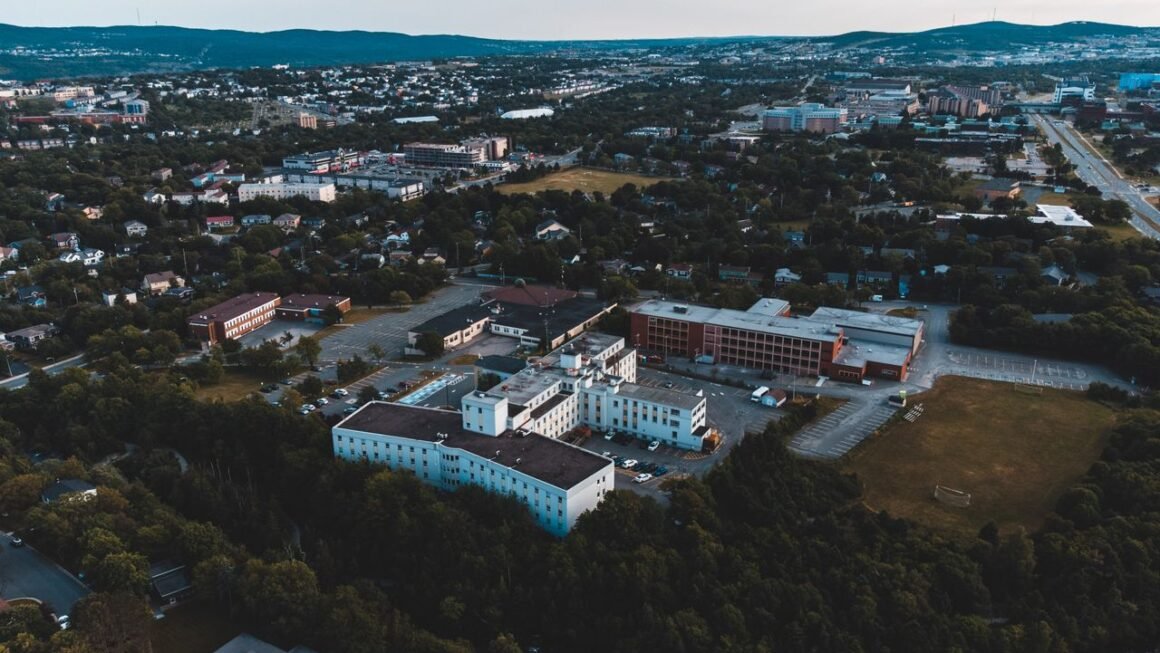
Santé Québec spends $30 million to acquire land for Maisonneuve-Rosemont Hospital’s $2.5 billion overhaul
Santé Québec has spent $30 million to acquire the land needed to expand Maisonneuve-Rosemont Hospital (HMR) in Montreal’s east end, according to CTV News Montreal. The purchase clears the last major obstacle standing between the aging facility and a $2.5 billion reconstruction that will more than double its single-room bed capacity. If you live in east Montreal or rely on HMR for care, this land deal is the clearest signal yet that construction crews, not just planning documents, will soon be moving onto the site.
The land Santé Québec acquired sits next to the hospital’s current footprint, giving planners the room they need to build without shutting down the existing facility during construction. That detail matters more than it might seem: HMR cannot simply close its doors while a new complex goes up around it.
Key takeaways
- The $30 million land purchase, confirmed by Santé Québec, is now finalized, meaning the $2.5 billion HMR modernization project has cleared a critical land-acquisition hurdle before major construction bids go out.
- Bed capacity will grow from roughly 400 to 720 single-room inpatient and intensive care beds, plus 26 dedicated neonatal beds, according to reporting on the Santé Québec announcement.
- Quebec’s premier has committed $700 million to the project, with an additional $400 million pledged on top of that, so track provincial budget updates if you want to gauge how much of the $2.5 billion price tag is already secured.
- If you work at or train through HMR, expect the site to remain fully operational throughout construction, since the plan relies on phased building rather than a full shutdown.
- The project targets completion around 2036, so patients and staff should plan for roughly a decade of ongoing construction activity around the current campus.
Why Santé Québec bought the land now
The timing isn’t arbitrary. HMR’s physical plant, much of it dating back decades, has reached a point where patching individual wings no longer makes financial or clinical sense. Securing the land now lets Santé Québec lock in a footprint before land values in the area climb further and before design contracts move into their next phase.
The $30 million transaction and what the parcel includes
According to CTV News Montreal, the deal covers the adjacent land required to expand HMR’s current site rather than relocate the hospital entirely. That distinction matters for continuity of care: patients will keep using the same address throughout construction, and ambulances won’t need new routing during the build-out. The parcel gives the project the physical space to construct new towers and support buildings without demolishing existing patient-care areas first.
How the land acquisition fits the project timeline toward 2036
With land secured, the next milestones are design finalization, tendering, and phased groundbreaking. Santé Québec has framed 2036 as the horizon for the completed Maisonneuve-Rosemont Hospital complex, a timeline that puts the project on a roughly ten-to-twelve-year build cycle from land acquisition to full operation. That’s a long runway, but it matches the scale of what’s being built: a near-doubling of bed capacity on a site that has to stay functional the entire time.
Inside the $2.5 billion modernization plan
The $2.5 billion figure covers reconstruction of multiple hospital sectors and an expansion built directly onto the current site, according to project documentation from GSS. This isn’t a cosmetic renovation. It’s a rebuild of how the hospital delivers acute and specialized care.
From 400 to 720 single-room beds, plus 26 neonatal beds
HMR currently operates with roughly 400 beds set aside for patient care, a figure that will grow to 720 single-room inpatient and intensive care beds under the new plan, according to reporting on the Santé Québec announcement. The project also adds 26 neonatal beds, a category the hospital has never had at this scale. Single-room design, rather than shared wards, follows a shift in infection control standards that gained urgency after COVID-19 exposed the risks of multi-bed rooms during outbreaks.
New operating rooms, intensive care units and support spaces
The plan also calls for new operating rooms, intensive care units, and the support spaces that go with them: laboratories, sterilization units, imaging suites, according to the project scope described by GSS. These support functions rarely make headlines, but they’re often the bottleneck in a hospital’s daily throughput. Adding capacity in these areas alongside bed growth suggests planners are targeting the full patient pathway, not just where people sleep.
Reconstruction versus new construction on the existing site
The plan blends reconstruction of existing sectors with new construction on the current grounds, according to GSS project specifications. That hybrid approach explains why the land acquisition was necessary in the first place: Santé Québec needed adjacent space to build new structures while older sections remain in use, then phase out the oldest buildings once replacements come online.
The political and funding story behind the project
Big hospital projects live or die on provincial budget commitments, and HMR’s has already shifted once.
Premier’s $700 million commitment and the extra $400 million pledge
Quebec’s premier committed $700 million to revamp Maisonneuve-Rosemont Hospital, then added an extra $400 million pledge on top of that figure, according to coverage of the announcement. Together those commitments cover a substantial share of the $2.5 billion total, though they don’t cover the full cost outright, leaving room for further federal or provincial allocations as the project moves through design and tendering.
“Créer l’hôpital du futur” is how the CIUSSS de l’Est-de-l’Île-de-Montréal frames the modernization plan on its official project page, a phrase that translates to “building the hospital of the future” and sets the tone for how planners describe the scope of work involved.
How provincial funding decisions shaped the scope
The scale of provincial funding shaped what made the final design: 720 beds instead of a more modest expansion, dedicated neonatal capacity, and full sector reconstruction rather than partial upgrades. If you’re following how Quebec allocates health infrastructure spending, HMR is now one of the province’s largest single hospital investments, and future budget cycles will determine whether the $2.5 billion figure holds or grows as construction costs shift.
What this means for east Montreal’s health care system
For residents east of downtown, HMR isn’t one option among several. It’s often the only major acute-care hospital within reach.
Hôpital Maisonneuve-Rosemont’s current role serving the east end
HMR is the primary hospital for Montreal’s east end, with around 800 beds across its full range of services and 5,000 employees, according to background data on the hospital. That employee count alone makes it one of the largest single employers in the borough, and its role expands further when you account for its status as a teaching hospital.
Easing pressure on other Montreal hospitals and reducing wait times
A larger HMR should ease pressure on other Montreal facilities that currently absorb east-end overflow, particularly during flu season or when emergency department volumes spike. If wait times at HMR have frustrated you in the past, the added ICU and operating room capacity is meant to address that bottleneck, though the benefit won’t materialize until phases of the new construction actually open.
Impact on the 5,000 employees and 3,000 students trained annually on site
HMR trains roughly 3,000 students annually alongside its 5,000-person workforce, according to hospital background information. A modernized campus with more operating rooms and updated teaching spaces should expand that training capacity too, which matters if you’re considering a career in nursing, medicine, or allied health fields tied to Quebec’s public system.
Construction timeline and what patients can expect through 2036
Anyone using the hospital in the coming years will want to know one thing: will care be disrupted?
Phased construction to keep the hospital operational
Santé Québec has structured the project around phased construction to keep HMR operational throughout the build, according to the CIUSSS de l’Est-de-l’Île-de-Montréal’s modernization overview. New buildings go up on the recently acquired land first, with patients and staff transitioning into new spaces as sections open, rather than the hospital closing wings all at once.
Milestones between now and the projected completion date
Expect the next visible milestones to include finalized architectural designs, construction tendering, and initial groundbreaking on the acquired parcel. Full completion is projected around 2036, meaning the east Montreal hospital modernization project will unfold across multiple premier terms and budget cycles, a reality that makes continued funding commitments worth watching closely.
How HMR’s expansion compares to other major Quebec hospital projects
| Metric | Current HMR | Planned HMR complex |
|---|---|---|
| Inpatient and ICU beds | Approx. 400 | 720 |
| Neonatal beds | Not separately reported | 26 |
| Total hospital beds (all types) | Approx. 800 | Expected to rise further |
| Employees | 5,000 | Expected to grow with expansion |
| Students trained annually | 3,000 | Expected to grow with expansion |
| Estimated total project cost | N/A | $2.5 billion |
| Confirmed provincial funding | N/A | $700 million plus $400 million pledge |
Positioning against Montreal’s largest hospitals by bed count
HMR already ranks among Montreal’s larger hospitals by total bed count, and the planned jump to 720 single-room inpatient and ICU beds pushes it further up that list once construction finishes. Montreal’s hospital network includes several large academic centers, and HMR’s expansion is meant to keep it competitive with those facilities on both capacity and technical capability, particularly in surgical and intensive care services.
Where the new HMR complex could rank among Canada’s biggest hospital builds
At $2.5 billion, the HMR project sits among the larger hospital construction efforts underway in Canada by budget. Whether it ultimately ranks as the single largest depends on how other provincial projects, some still in planning, scale up their own budgets over the same decade-plus timeline.