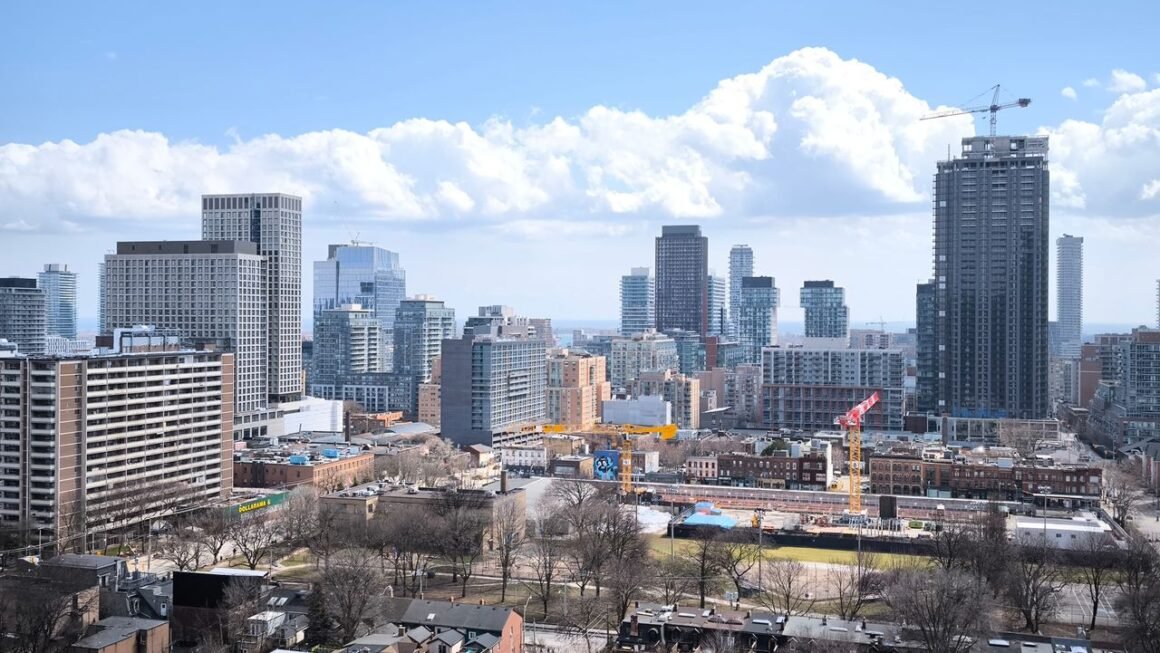
After several years of skyrocketing prices and market volatility, the Toronto real estate market is showing promising signs of stabilization. Industry experts are cautiously optimistic, suggesting that the cooling measures implemented by government agencies are beginning to have their intended effect.
The latest data from the Toronto Regional Real Estate Board (TRREB) indicates a subtle but significant shift towards a more balanced market, with housing prices finding a steady plateau rather than the steep climbs or drops characteristic of previous years.
This development comes as a relief to both potential homebuyers and economists who have been concerned about the sustainability of such rapid growth in the housing sector. “The moderation in price increases is a positive sign that the market is settling into a more sustainable pattern,” says Marianne Grant, a senior economist at a Toronto-based financial institution.
Real estate agents across the city are reporting changes in the behaviours of both buyers and sellers, influenced by the new market dynamics. “Sellers are becoming more realistic about their pricing expectations,” notes Michael Chen, a veteran real estate agent with over two decades of experience in the Toronto market. “At the same time, buyers are feeling less pressured to make rushed decisions, which contributes to a more rational market environment.”
Despite these positive signs, challenges remain. The supply of affordable housing continues to lag behind demand, particularly in the more desirable neighbourhoods. Additionally, the rental market remains tight, with vacancy rates hovering at low levels.
Government interventions, including stricter mortgage qualification rules and taxes on foreign buyers, have played a significant role in tempering the market’s extremes. These measures were introduced in response to fears of a housing bubble, similar to those experienced in other global cities.
Experts like Grant believe that these policies are now starting to bear fruit. “It’s a complex ecosystem, but the cooling measures appear to be working as intended,” she explains. “It doesn’t mean prices will suddenly drop, but we’re seeing less of the frenzied bidding wars and more measured transactions.”
The stabilization of the market is also having a broader economic impact. A more predictable real estate market helps to stabilize the local economy by making it easier for businesses to plan and invest. “Stable housing markets tend to support stable job markets,” Chen adds.
Still, the news isn’t uniformly positive across all segments of the market. The luxury segment continues to perform strongly, often decoupled from the general trends affecting the broader market.
For middle-class families, the dream of homeownership remains challenging, albeit slightly more attainable than it was at the peak of the market frenzy. “The key issue remains affordability, especially for new entrants into the market,” says Grant.
Community leaders and housing advocates are also weighing in on the discussion, emphasizing the need for continued vigilance and additional measures to ensure the market remains accessible. “We need to build on the progress we’ve made and continue to focus on increasing the supply of affordable housing,” states Sarah Kim, a spokesperson for a Toronto housing advocacy group.
As Toronto heads into another year, the real estate market will undoubtedly remain a hot topic. The current signs of stabilization are welcomed, but the city’s growth and the ongoing demand for housing will continue to pose challenges and opportunities.
The implications of these trends are significant not only for those directly involved in the real estate sector but also for the broader population. A stable and accessible housing market is crucial for the overall health and prosperity of any major city, and Toronto is no exception.
As this new chapter in Toronto’s real estate story unfolds, all eyes will be on the market’s ability to maintain this newfound balance. The coming months will be crucial in determining whether these signs of stabilization herald a long-term trend or merely a temporary respite from the volatility that has characterized the market in recent years.
Understanding the Shift: Toronto’s Real Estate Market Trends
Recent Market Performance
The latest figures from TRREB show a moderate increase in home prices across the Greater Toronto Area (GTA). While this increase is more subdued compared to previous years, it marks a significant change in the market dynamics. The average home price in the GTA now stands at approximately CAD $1.2 million, reflecting a gentle upward trajectory.
Government Interventions and Their Impact
The series of governmental measures that were rolled out starting in 2017 have included everything from increased land transfer taxes for foreign buyers to tightened mortgage eligibility criteria. These interventions were designed to cool down an overheated market and prevent the formation of a housing bubble.
Future Outlook
Experts like Marianne Grant and Michael Chen predict that the Toronto real estate market will continue to stabilize, with potential for slight increases in home values. However, they caution that a significant upturn or downturn is unlikely in the near future, barring any major economic upheavals.
Marianne Grant is a senior economist at a Toronto-based financial institution. With over 15 years of experience in economic analysis and policy development, she has a deep understanding of the Canadian housing market and its implications on national and regional economies.
Michael Chen has been a real estate agent in Toronto for over 20 years. Specializing in residential properties, Chen has a keen insight into market trends and buyer/seller behaviour in one of Canada’s most dynamic real estate markets.
Sarah Kim is a spokesperson for a prominent housing advocacy group in Toronto. She has been actively involved in various initiatives aimed at increasing the availability of affordable housing in the city and is a vocal advocate for policy changes to support this goal.